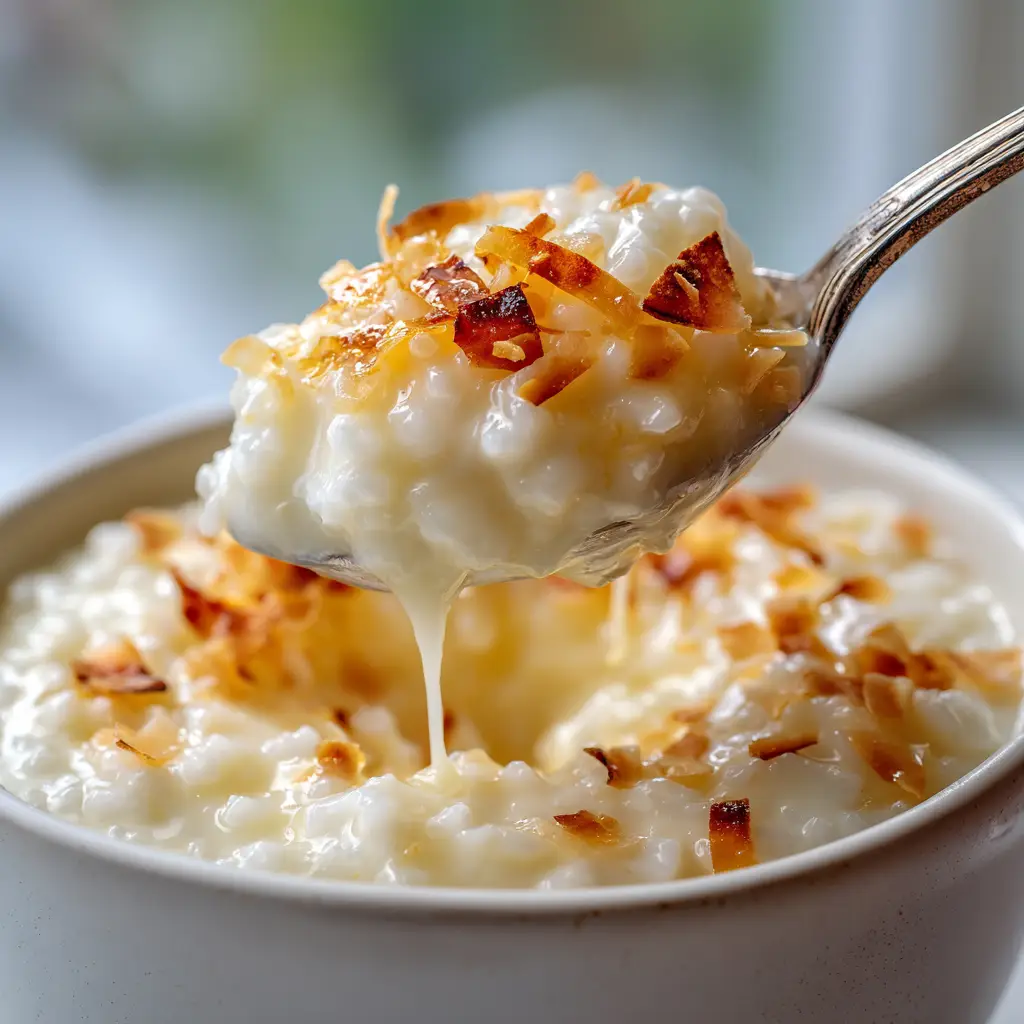
There is something fundamentally comforting about a perfectly executed Coconut Rice Pudding Recipe. It is more than just a dessert; it is a masterclass in texture, balancing the delicate bite of tender grain against a backdrop of silky, fat-rich cream. If you have ever stared at a macro photograph of a glistening silver spoon lifting a dollop of ivory pudding, you know exactly the sensory experience we are aiming for today.
This recipe focuses on the interplay between high-quality coconut fats and the natural starches of the rice. We aren’t just boiling grains in milk; we are emulsifying a dessert that captures a glossy, silky sheen and a luscious mouthfeel. The result is a pudding so thick and velvety that it clings to the spoon with a beautiful, organic drip, just like a professional food stylist’s dream.
Whether you are looking for a dairy-free alternative to the classic version or you simply crave the aromatic depth of toasted coconut, this guide will walk you through the culinary science of achieving that indulgent consistency. Prepare your white ceramic bowls, because this is the only Coconut Rice Pudding Recipe you will ever need.
Why This Velvety Coconut Rice Pudding Recipe Works
- Unmatched Glossy Sheen: By incorporating a touch of pure coconut oil at the end, we achieve those translucent droplets that catch the light, ensuring every bite looks as good as it tastes.
- Complex Texture Profile: We combine soft, tender rice grains with the crunch of irregular toasted coconut flakes to create a sophisticated sensory contrast.
- Dairy-Free Decadence: Utilizing full-fat canned coconut milk provides a thick, velvety cream foundation that rivals any heavy cream-based custard.
- Precision Sweetness: We balance the natural sugars of the coconut with a hint of salt and vanilla to ensure the dessert is indulgent but never cloying.
The Anatomy of a Perfect Tropical Grain Pudding
To achieve the visual and structural results seen in high-end culinary photography, your ingredient selection is paramount. We don’t use “fluff” here; every component serves a functional purpose in building that thick, indulgent bite.
1 cup (185g) Jasmine or Arborio Rice: These varieties are high in starch, which is essential for creating the natural “glue” that binds the pudding. Avoid parboiled rice, as it won’t release the necessary amylopectin for a velvety finish.
2 cans (27oz / 800ml) Full-Fat Coconut Milk: Do not use the refrigerated carton “beverage” version. You need the high fat content of canned milk to achieve the glossy sheen and thick creaminess described in our visual blueprint.
1/2 cup (100g) Granulated Sugar: This provides the structural sweetness that macerates the rice grains, keeping them tender even after the pudding has cooled.
1/4 tsp (1.5g) Fine Sea Salt: A critical “invisible” ingredient. Salt cuts through the heavy fats of the coconut milk, brightening the overall flavor profile and enhancing the aromatic notes.
1 tsp (5ml) Pure Vanilla Extract: Vanilla adds a floral depth that bridges the gap between the nutty coconut and the neutral rice grain.
1 tbsp (15g) Virgin Coconut Oil: This is the secret to the “translucent droplets” mentioned in our Midjourney prompt. Stirring this in at the very end creates a luxurious, oily sheen on the surface.
1/2 cup (40g) Unsweetened Large Coconut Flakes: We will toast these until they are golden brown and irregular, providing a messy, organic aesthetic and a necessary crunch.
Essential Equipment for a Lustrous Finish
While the Coconut Rice Pudding Recipe is simple in its components, the tools you use help manage the delicate heat required for a thick consistency. Using a heavy-bottomed saucepan or a Dutch oven is non-negotiable to prevent the sugars and fats from scorching on the bottom.
A silicone spatula is preferred over a wooden spoon because it allows you to scrape the “fond” or the thickening cream from the edges of the pot effectively. This ensures that every bit of starch is incorporated into the liquid. Finally, a small dry skillet is needed for toasting the coconut flakes to achieve that perfect, scattered look.
The Culinary Blueprint: Step-by-Step Instructions
Phase 1: Rinsing and Activating the Grain
Begin by placing your 1 cup (185g) of rice in a fine-mesh sieve. Rinse under cold water for about 30 seconds until the water runs mostly clear. While some starch is good for thickening, removing the excess surface dust ensures that the individual grains remain distinct and soft rather than turning into a singular gummy mass.
Phase 2: The First Simmer
In your heavy-bottomed pot, combine the rinsed rice with 1 ½ cups (355ml) of water and a pinch of salt. Bring to a boil over medium-high heat, then immediately reduce to a low simmer. Cover the pot and let the rice absorb the water for about 10 minutes. This “pre-cooking” step ensures the rice is tender enough to absorb the heavy coconut fats in the next stage.
Phase 3: Building the Velvety Cream
Pour in both cans of full-fat coconut milk and the sugar. Stir well with your silicone spatula. Increase the heat slightly to bring the mixture to a very gentle bubble, then drop the heat to the lowest setting. You want to see small, infrequent bubbles—never a rolling boil, which could break the emulsion of the coconut milk.
Cook uncovered for 20-25 minutes, stirring every few minutes. As the liquid reduces, it will transform into a thick, velvety cream. Watch for the sensory cue: when the pudding coats the back of a spoon and you can draw a clear line through it with your finger, it is ready.
Phase 4: Achieving the Forensic Visual Accents
While the pudding simmers, place your coconut flakes in a dry skillet over medium heat. Toss them constantly for 2-3 minutes. Look for irregular browning—some edges should be dark gold while others remain ivory. Remove from heat immediately to prevent burning.
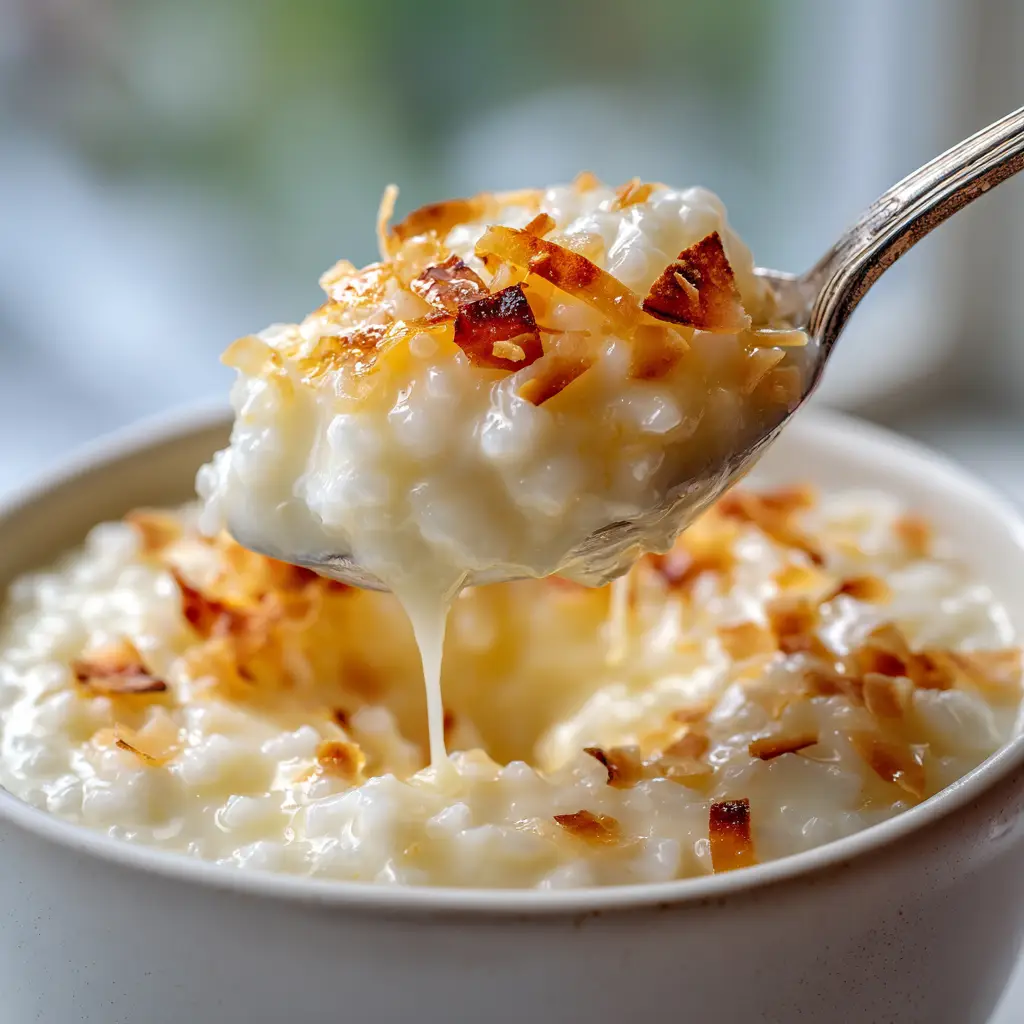
Once the pudding has reached your desired indulgent consistency, stir in the vanilla extract and that final tablespoon of coconut oil. The oil will melt into the warm pudding, creating those beautiful, translucent droplets and a glossy, silky sheen that reflects the light perfectly.
Expert Tips for a Professional Texture
- The Cooling Factor: Remember that rice pudding thickens significantly as it cools. If it looks “perfect” in the pot, it might be too thick once served. Aim for a slightly loose consistency before removing from heat.
- Avoid the Skin: To prevent a rubbery skin from forming on top, place a piece of plastic wrap or parchment paper directly onto the surface of the pudding as it cools.
- The “Messy” Style: When plating in your white ceramic bowl, use a silver spoon to lift a generous scoop and let a small drip slide down the side. This asymmetrical styling mimics high-end editorial photography.
- Rehydrating: If the pudding becomes too thick in the refrigerator, stir in a splash of coconut water or almond milk to loosen the cream back to its original velvety state.
Mastering the Art of Flavor Pairings
This Coconut Rice Pudding Recipe is a versatile canvas that pairs exceptionally well with bright, acidic flavors. If you are serving this as part of a larger meal, consider a menu that moves from savory and sharp to creamy and sweet.
Start your meal with some tangy refrigerator pickles to prime the palate. For a main course, the tropical notes of this pudding are the perfect follow-up to mango glazed chicken or a vibrant mediterranean shrimp bowl. If you prefer a lighter side earlier in the day, a spicy pineapple cucumber salad offers a heat that the cool coconut cream will eventually soothe.
For those who love a full coconut-themed day, you might even enjoy a frozen peach smoothie as a mid-afternoon snack before diving into this rich dessert for dinner. The acidity in the fruit helps balance the high fat content of the rice pudding.
Frequently Asked Questions
It is not recommended. Low-fat or ‘light’ coconut milk lacks the fat content required to create the glossy sheen and indulgent mouthfeel. For the best results, use full-fat canned coconut milk.
Stir in one tablespoon of virgin coconut oil at the very end of the cooking process. The oil will emulsify slightly but leave beautiful, glistening droplets on the surface.
It can be served either way! It is exceptionally comforting when warm, but it thickens into a rich, custard-like consistency when chilled. Both are delicious.
Short-grain or medium-grain rices like Arborio or Jasmine are best. They contain more starch (amylopectin), which is essential for creating that thick, velvety texture as they cook.
This usually happens if it hasn’t simmered long enough to reduce the liquid or if the heat was too high. Low and slow cooking is the key to releasing starches and thickening the cream.
The Ultimate Creamy Coconut Rice Pudding
Coconut Rice Pudding Recipe: An Ultra-Creamy Tropical Indulgence
Ingredients
Equipment
Method
- Rinse the rice in a fine-mesh sieve under cold water for 30 seconds to remove excess surface starch.
- In a heavy-bottomed pot, combine rice, water, and salt. Bring to a boil, then cover and simmer on low for 10 minutes until water is absorbed.
- Stir in the two cans of full-fat coconut milk and the sugar. Bring to a very gentle simmer uncovered.
- Cook on low heat for 20-25 minutes, stirring frequently with a silicone spatula. Look for a thick, velvety consistency that coats the spoon.
- While pudding simmers, toast the flakes in a dry skillet over medium heat for 2-3 minutes until golden and irregular.
- Remove from heat. Stir in vanilla and coconut oil. The oil should create tiny, translucent droplets for a glossy sheen.
- Spoon into ceramic bowls, top with toasted flakes, and serve warm or chilled with an organic drip for styling.
Notes
If the pudding thickens too much after refrigeration, stir in a tablespoon of coconut milk to restore the velvety texture.
The Final Scoop: Why You’ll Love This Recipe
This Coconut Rice Pudding Recipe represents the pinnacle of home-cooked comfort. By following these professional techniques—toasting your own flakes, using full-fat milk, and finishing with coconut oil—you elevate a humble grain into a five-star dessert. The contrast of the soft rice grains against the thick, velvety cream is a texture you won’t soon forget.
We invite you to try this recipe and experience the indulgent consistency for yourself. If you enjoyed the process and the results, please leave a comment below or sign up for our newsletter for more forensic-level recipe guides. Don’t forget to share your beautiful creations on Pinterest to inspire other home cooks!