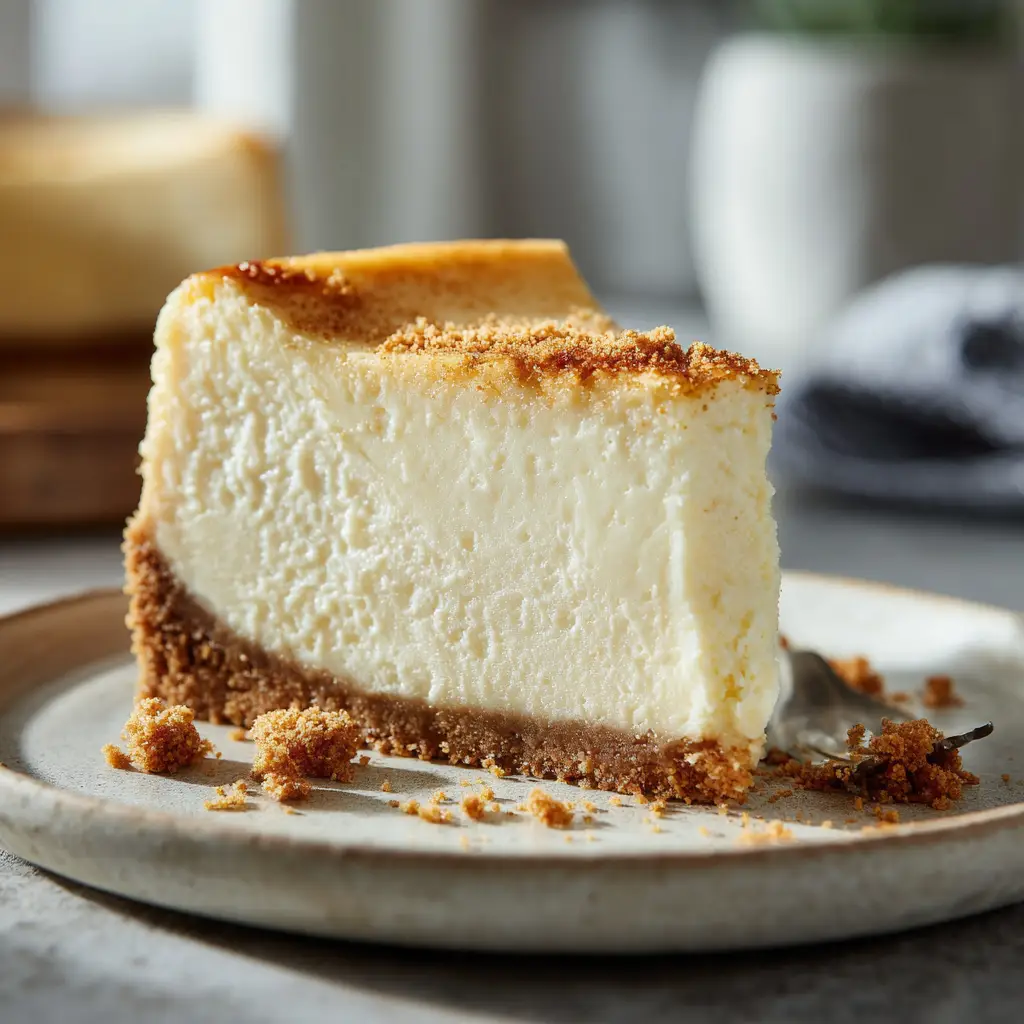
There’s a special kind of magic in a truly perfect slice of cheesecake. Imagine a fork sinking effortlessly through a dense, impossibly creamy filling, finally meeting the satisfying crunch of a thick, buttery graham cracker crust. This isn’t just a dessert; it’s a masterpiece, a moment of pure indulgence. This classic cheesecake recipe is designed to bring that exact vision to life—the kind of authentic, mouth-watering slice you’d find on a rustic plate in a cozy kitchen, with natural light highlighting every delicious detail.
Forget everything you’ve feared about making cheesecake at home. We’re demystifying the process, from creating a crack-free surface to achieving that iconic dense texture that defines a New York-style classic. This is your guide to creating that irresistible ‘yum factor’ from scratch.
Why This Is the Only Cheesecake Recipe You’ll Ever Need
This recipe is meticulously crafted to deliver a flawless result that perfectly matches that dream slice. Here’s what makes it stand out:
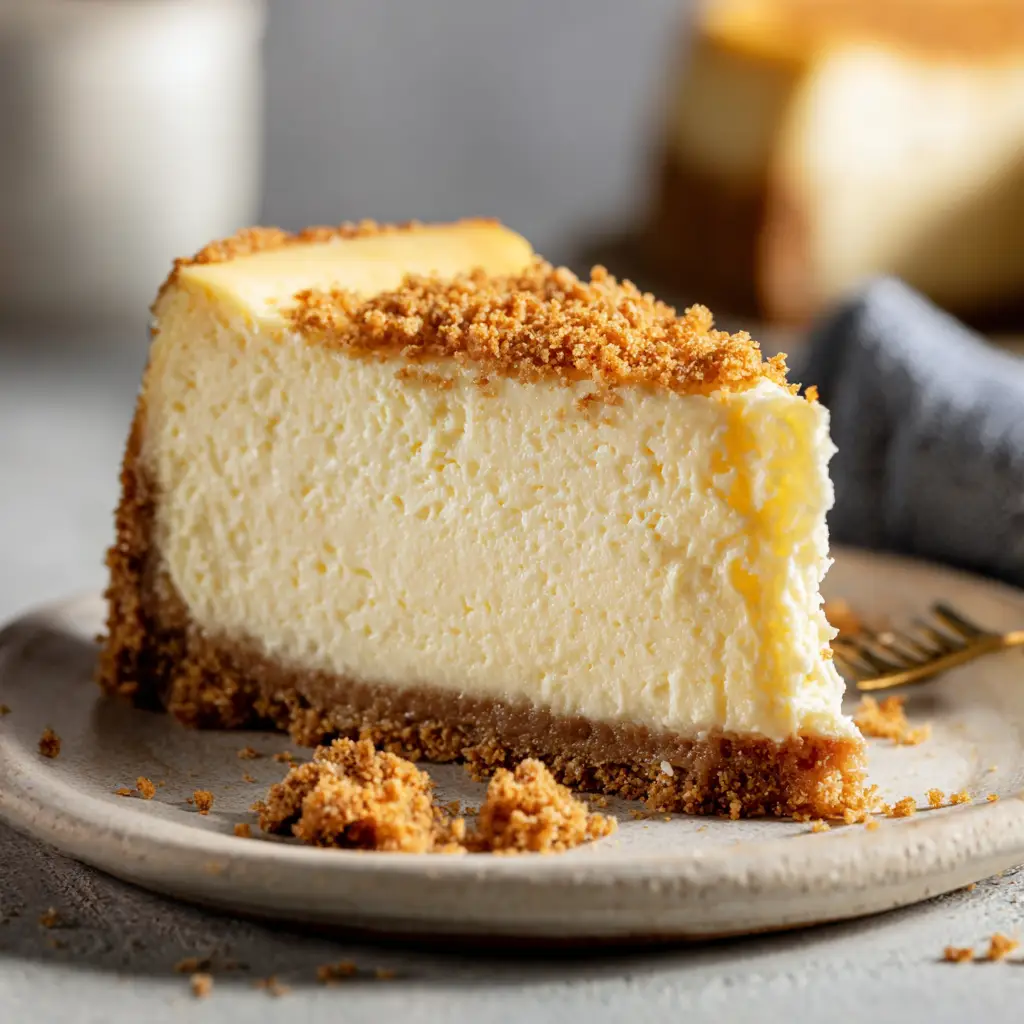
- Unbelievably Creamy & Dense Texture: We use full-fat cream cheese and a specific mixing technique to create a rich, smooth filling that’s substantial yet melts in your mouth, just like the authentic home-cooked masterpiece you’re picturing.
- A Thick, Buttery Graham Cracker Crust: This isn’t a thin, flimsy base. We use the perfect ratio of butter to crumbs to build a thick, flavorful, and structurally sound foundation that tastes as good as it looks.
- The No-Crack Method: The secret to a pristine, beautiful cheesecake top is a gentle, humid baking environment. We’ll walk you through the simple water bath technique that guarantees a perfect, celebration-worthy finish every time.
The Building Blocks for a Perfect Cheesecake
Every ingredient plays a crucial role in achieving the final, picture-perfect result. Here’s what you’ll need and why:
For That Thick, Buttery Graham Cracker Crust
- Graham Cracker Crumbs: 1 1/2 cups (150g) – These form the crumbly, sweet base of our foundation. You can buy pre-made crumbs or simply process about 10 full graham cracker sheets in a food processor.
- Unsalted Butter: 6 tablespoons (85g), melted – Butter is the binder that holds the crust together, ensuring it’s firm, not crumbly, and adds a rich, decadent flavor.
- Granulated Sugar: 1/4 cup (50g) – Just a little sugar adds sweetness and helps the crust crisp up beautifully during its pre-bake.
For the Dense & Creamy Cheesecake Filling
- Full-Fat Block Cream Cheese: 32 ounces (904g), softened to room temperature – This is the star of the show. Using four full blocks of room temperature, full-fat cream cheese is non-negotiable for achieving that classic dense, New York-style texture.
- Granulated Sugar: 1 cup (200g) – Sugar provides the essential sweetness that balances the tang of the cream cheese.
- Large Eggs: 4, at room temperature – Eggs are crucial for the structure and rich custard-like consistency. Bringing them to room temperature helps them incorporate smoothly without over-mixing.
- Sour Cream: 1 cup (240g), at room temperature – Sour cream adds moisture and a subtle tang that is the signature of a great New York cheesecake. It also contributes to the ultra-creamy texture.
- Pure Vanilla Extract: 1 teaspoon (5ml) – Vanilla enhances all the other flavors, adding a warm, aromatic depth to the filling.
- Lemon Juice: 1 tablespoon (15ml), fresh – A secret weapon! Fresh lemon juice brightens the flavor of the cream cheese and cuts through the richness, preventing the cheesecake from tasting too heavy.
Essential Tools for Cheesecake Mastery
To ensure your cheesecake-making process is smooth and successful, you’ll want to have the right equipment on hand. Nothing fancy is required, but these tools are key to the process.
- 9-inch Springform Pan: This is essential for easily removing the cheesecake without damaging its beautiful structure.
- Electric Mixer (Stand or Handheld): Crucial for getting that lump-free, silky-smooth filling.
- Large Roasting Pan: This will hold the springform pan and hot water for the water bath (bain-marie).
- Heavy-Duty Aluminum Foil: You’ll need this to wrap the outside of your springform pan to make it watertight.
- Mixing Bowls, Spatula, and Measuring Cups.
Crafting Your Classic Cheesecake: A Step-by-Step Journey
Follow these steps closely, paying attention to the sensory cues. The process is as rewarding as the final result.
Step 1: Preparing the Buttery Graham Cracker Foundation
First, preheat your oven to 350°F (175°C). In a medium bowl, combine the graham cracker crumbs and granulated sugar. Pour in the melted butter and mix with a fork until all the crumbs are evenly moistened, resembling wet sand. Press this mixture firmly and evenly into the bottom and slightly up the sides of your 9-inch springform pan. Bake for 10 minutes until it’s fragrant and lightly golden. Set it aside to cool while you prepare the filling.
Step 2: Mixing the Silky-Smooth Cream Cheese Filling
In the bowl of a stand mixer fitted with the paddle attachment, or using a hand mixer, beat the softened cream cheese on medium speed until it’s completely smooth and creamy, with no lumps. This is a critical step, so scrape down the sides and bottom of the bowl often. Add the granulated sugar and beat until just combined. You’ll see the mixture become a little looser. Add the room temperature eggs one at a time, mixing on low speed after each addition until the yolk just disappears. Do not over-mix here; this is key to preventing cracks!
Step 3: Finishing the Filling and Preparing the Water Bath
With the mixer still on low, gently mix in the sour cream, vanilla extract, and fresh lemon juice until just incorporated. The final batter should be smooth, thick, and silky. Now, prepare the water bath. Take a large piece of heavy-duty aluminum foil and wrap the outside of your springform pan. Repeat with a second layer to ensure no water can seep in. Place the wrapped pan inside a large roasting pan.
Step 4: Baking and Cooling: The Final, Crucial Steps
Pour the cheesecake filling over your cooled crust and spread it into an even layer. Carefully place the roasting pan in the oven, then pour boiling water into the roasting pan until it comes about halfway up the sides of your springform pan. Bake for 60-70 minutes. You’ll know it’s done when the edges are set, but the center 2-3 inches still has a slight jiggle to it. Turn off the oven, crack the door open, and let the cheesecake cool slowly in the oven for 1 hour. This slow temperature change is another secret to a crack-free surface. Remove the cheesecake from the water bath, take off the foil, and let it cool completely on a wire rack. Finally, cover with plastic wrap and chill in the refrigerator for at least 6 hours, but preferably overnight, for the best flavor and texture.
Pro Secrets for a Flawless, Crack-Free Cheesecake
Keep these tips in mind to elevate your cheesecake from good to a home-cooked masterpiece.
- Room Temperature is Key: Cold ingredients don’t emulsify properly, leading to a lumpy batter and cracks. Ensure your cream cheese, eggs, and sour cream are all truly at room temperature.
- Don’t Over-Mix the Eggs: Beating too much air into the batter after adding the eggs is the number one cause of cracks. Mix on low speed and only until they are just combined.
- Don’t Skip the Water Bath: The steam from the water bath creates a humid oven, which allows the cheesecake to bake gently and evenly, preventing both cracks and a dry texture.
- The Slow Cool Down is Mandatory: Drastic temperature changes will cause the cheesecake to contract and crack. Letting it cool slowly in the turned-off oven is a non-negotiable step for a perfect top.
Storing and Serving Your Culinary Masterpiece
Your beautiful cheesecake can be stored in the refrigerator, covered, for up to 5 days. For serving, allow a slice to sit at room temperature for about 15-20 minutes to take the chill off; this enhances the creamy texture and flavor. This dessert is also fantastic for making ahead. The entire cheesecake can be frozen for up to 2 months. Thaw it overnight in the refrigerator before slicing and serving.
Delicious Pairings and Dessert Inspirations
While this classic cheesecake recipe is a showstopper on its own, it’s also a wonderful centerpiece for a dessert table. If you’re a fan of rich, decadent desserts, you might also fall in love with our decadent Turtle Lasagna Dessert. For those who love the classic combination of cream cheese in a more portable form, try these incredible Cannoli Cheesecake Bars. And if you’re looking for another simple, classic treat, you can’t go wrong with these timeless Reese’s Peanut Butter Cookies.
Your Classic Cheesecake Questions, Answered
Here are answers to some of the most common questions about making cheesecake at home.
Absolutely. Cheesecake is an ideal make-ahead dessert. It needs at least 6 hours to chill, but the flavor and texture are even better if you make it the day before you plan to serve it.
While a springform pan is highly recommended for easy removal, you could use a 9-inch deep-dish cake pan. You would need to line it with parchment paper with overhangs to lift it out, but it will be tricky to remove cleanly.
For the best texture and to prevent cracks, yes. A water bath (bain-marie) adds moisture to the oven, allowing the cheesecake to bake gently and evenly, resulting in a creamy, smooth, and crack-free dessert.
The cheesecake is perfectly baked when the edges are set and slightly puffed, but the center 2-3 inches still has a distinct jiggle, similar to Jell-O. It will continue to set as it cools.
Cheesecakes typically crack from being over-mixed (especially after adding eggs), over-baked, or cooled too quickly. This recipe uses a gentle water bath and a slow cooling process in the oven to prevent cracks.
Your Printable Guide to the Perfect Classic Cheesecake Recipe
You’re ready to create the cheesecake of your dreams. Follow the recipe below, and you’ll be rewarded with a rich, creamy, and beautiful dessert that will wow everyone.
Classic Cheesecake Recipe for a Flawlessly Creamy Dessert
Ingredients
Equipment
Method
- Preheat oven to 350°F (175°C). Combine graham cracker crumbs, sugar, and melted butter. Press firmly into the bottom and slightly up the sides of a 9-inch springform pan. Bake for 10 minutes. Let cool.
- Using an electric mixer, beat the softened cream cheese on medium speed until completely smooth. Add sugar and mix until just combined. Add room temperature eggs one at a time, mixing on low speed only until each is just incorporated.
- On low speed, gently mix in the sour cream, vanilla, and lemon juice until just combined. Wrap the outside of the springform pan with two layers of heavy-duty foil. Place in a large roasting pan. Pour filling over the crust.
- Place the roasting pan in the oven. Pour boiling water into the roasting pan to come halfway up the sides of the springform pan. Bake for 60-70 minutes, until the edges are set but the center still has a slight jiggle.
- Turn off the oven and crack the door open, leaving the cheesecake inside to cool for 1 hour. Remove from the water bath and cool completely on a wire rack. Cover and chill in the refrigerator for at least 6 hours, or preferably overnight, before serving.
Notes
Don't Over-Mix the Eggs: Over-mixing incorporates too much air, which is the primary cause of cracks. Mix on low speed just until combined.
Don't Skip the Water Bath: The steam creates a humid environment for gentle, even baking, which is essential for a creamy texture and perfect top.
Slow Cool Down is Mandatory: Cooling the cheesecake slowly in the turned-off oven prevents it from contracting too quickly and cracking.
Share Your Masterpiece!
We can’t wait to see your stunning homemade cheesecake! The beauty of this classic cheesecake recipe is its simplicity and elegance. If you make it, please leave a comment below and let us know how it turned out. Don’t forget to share a picture of your creation and tag us on Pinterest!