Transport your taste buds straight to the sun-drenched islands of the Aegean with this Authentic Greek Horiatiki Salad. Unlike the “Greek salads” often found in Western cafes, a true Horiatiki is defined by its rustic simplicity, lack of leafy greens, and the iconic slab of feta resting proudly on top. This handheld smartphone photo-worthy dish is a masterclass in using high-quality, seasonal ingredients to create a flavor profile that is simultaneously crisp, salty, and incredibly refreshing.
When you prepare an Authentic Greek Horiatiki Salad, you are embracing the “Village” style of eating. Every bite of these large tomato wedges and thick cucumber slices tells a story of Mediterranean summers. Whether you are looking for the perfect side for your Greek chicken gyros or a light, stand-alone lunch, this recipe delivers the exact visual and sensory experience you’d find at a seaside taverna in Mykonos.
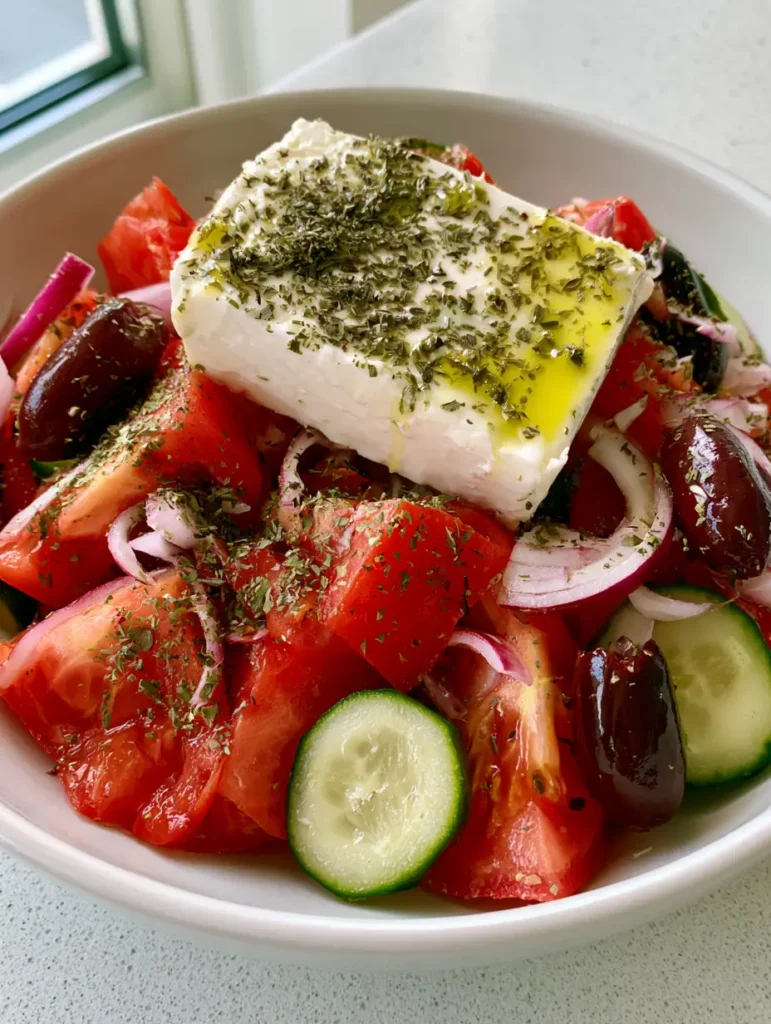
Why This Traditional Village Salad is a Pinterest Sensation
- Zero Lettuce Policy: This is a true “Horiatiki,” meaning it relies on the crunch of unpeeled Persian cucumbers and juicy tomatoes rather than filler greens.
- Visually Stunning Textures: From the whole Kalamata olives to the thick rectangular slab of creamy white feta, every element is designed for maximum visual impact and “saveability.”
- Ten-Minute Prep: No cooking required—just expert slicing and a generous drizzle of liquid gold olive oil.
- Pantry-Friendly Staples: Using simple ingredients like dried oregano flakes and extra virgin olive oil makes this an accessible luxury for any home cook.
The Anatomy of a Perfect Authentic Greek Horiatiki Salad
To achieve that forensic visual accuracy seen in the world’s best food photography, you must choose your ingredients with intention. This isn’t just a salad; it’s a structural masterpiece. If you enjoy the textures here, you’ll also love our Mediterranean pasta salad for your next meal prep session.
The Vibrant Base: Large Tomato Wedges
The soul of the Authentic Greek Horiatiki Salad lies in the tomatoes. We use 4 large, vine-ripened tomatoes (approx. 600g). Do not dice them into small cubes; instead, cut them into large, jagged wedges. This allows the tomatoes to hold their structure and release just enough juice to mingle with the olive oil, creating a natural dressing.
The Crunch Factor: Thick-Cut Persian Cucumbers
Texture is everything. Take 2-3 Persian cucumbers (approx. 250g) and slice them into thick-cut rounds. We leave them unpeeled to maintain that vibrant green edge and a superior “snap” in every bite. This contrasts beautifully with the softer elements of the dish.
The Pungent Kick: Thinly Sliced Red Onion
One small red onion (approx. 100g) should be sliced into thin, crescent-shaped slices. These delicate arcs provide a sharp, peppery bite without overpowering the sweetness of the tomatoes. If the onion is too sharp, a quick soak in cold water for 5 minutes can mellow the flavor.
The Briny Jewels: Whole Kalamata Olives
Never use sliced canned olives. For an Authentic Greek Horiatiki Salad, you need about 1/2 cup (75g) of whole, glossy dark purple Kalamata olives. Keeping them whole preserves their meaty texture and prevents the brine from muddying the colors of the other vegetables.
The Crown Jewel: A Thick Slab of Feta
This is the most critical visual component. Do not crumble the cheese! Place one large, thick rectangular slab of high-quality sheep’s milk feta (approx. 200g) right on top of the assembled vegetables. This creamy white block is the centerpiece that defines the traditional aesthetic.
The Finishing Touch: Liquid Gold and Green Flakes
To finish, we apply a generous drizzle of extra virgin olive oil (approx. 1/4 cup or 60ml) and a heavy dusting of dried green oregano flakes. The oil should coat the vegetables and the cheese, catching the light for that “unedited realistic aesthetic.”
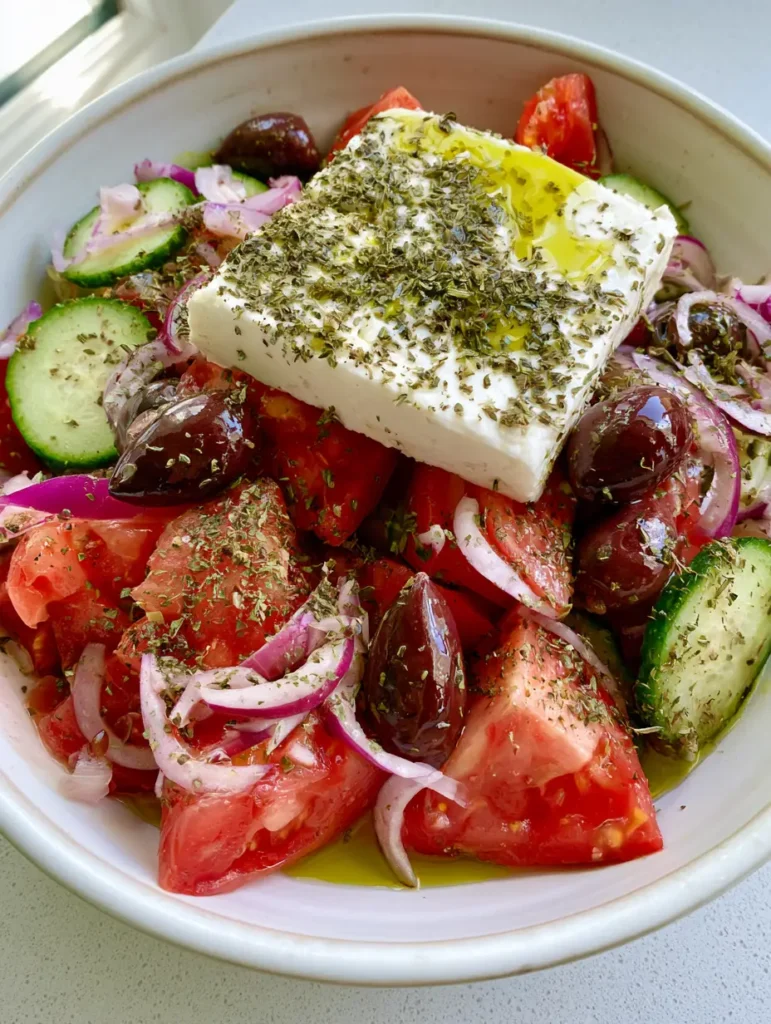
How to Assemble Your Traditional Greek Village Salad
Step 1: The Rustic Vegetable Prep
Begin by washing your produce in cold water. Cut the tomatoes into large wedges and the cucumbers into thick rounds. Combine them in a shallow white ceramic bowl. This creates the “jagged” and “thick-cut” foundation required for a true Horiatiki look. If you’re pairing this with Greek lamb gyro bowls, the prep steps are nearly identical!
Step 2: Layering the Aromatics
Scatter the thin, crescent-shaped red onion slices over the tomato and cucumber base. Toss in the whole Kalamata olives. Do not over-mix; we want the individual colors of the red tomatoes, green cucumbers, and purple olives to remain distinct and vibrant for the camera.
Step 3: Positioning the Feta Slab
Place your 7-ounce (200g) rectangular block of feta cheese directly in the center of the salad. It should sit prominently on top, inviting the diner to break off pieces as they eat. This is a hallmark of the Authentic Greek Horiatiki Salad experience.
Step 4: The Final Seasoning Drizzle
Drizzle 4 tablespoons (60ml) of your best extra virgin olive oil over the entire dish, ensuring the feta gets a golden coating. Sprinkle 1 tablespoon of dried oregano flakes over the cheese and vegetables. Add a pinch of sea salt, but be careful—the feta and olives are naturally salty!
Expert Tips for the Most Authentic Results
- Room Temperature is Key: Never serve this salad ice-cold. Let the tomatoes sit at room temperature to unlock their full aromatic potential.
- The Oil Quality Matters: Since there is no vinegar in a traditional Horiatiki, your olive oil provides the bulk of the flavor. Use a cold-pressed, Greek extra virgin olive oil for that signature peppery finish.
- Bread is Mandatory: Serve with crusty bread to soak up the “papi” (the delicious mixture of tomato juice and olive oil at the bottom of the bowl).
- Avoid the Pitfalls: Do not add lettuce, bell peppers (unless very traditional), or bottled dressings. Stick to the Visual Recipe Blueprint for success.
Storage and Meal Prep Advice
The Authentic Greek Horiatiki Salad is best enjoyed immediately after assembly. However, if you have leftovers, they can be stored in an airtight container in the refrigerator for up to 24 hours. Note that the tomatoes will release more juice over time, and the cucumbers will lose some of their crunch.
This recipe is not suitable for freezing. If you are looking for a more “make-ahead” friendly option, consider our cucumber ranch crack salad, which holds its crunch longer in the fridge.
What to Serve With Your Horiatiki Salad
This salad is incredibly versatile. It acts as a cooling counterpoint to grilled meats and spiced grains. We highly recommend serving it alongside:
- Juicy Greek Chicken Marinade skewers.
- Warm pita bread and a side of hummus.
- A glass of chilled Assyrtiko white wine.
Frequently Asked Questions
While it tastes the same, an Authentic Greek Horiatiki Salad is traditionally served with a whole slab of feta on top to maintain the rustic, village aesthetic.
It is best served immediately. After 24 hours, the tomatoes lose their texture and the salad becomes too watery, though the flavor remains delicious.
In a traditional Horiatiki, Persian or English cucumbers are often left unpeeled to provide extra crunch and a beautiful dark green visual contrast.
A true Horiatiki doesn’t use a whisked dressing. Instead, you simply drizzle high-quality extra virgin olive oil over the vegetables and sprinkle with dried oregano.
Traditional Greek ‘Village’ salad (Horiatiki) is a seasonal dish designed to highlight summer produce like tomatoes and cucumbers; lettuce is not part of the traditional recipe.
The Authentic Greek Horiatiki Salad Recipe Card
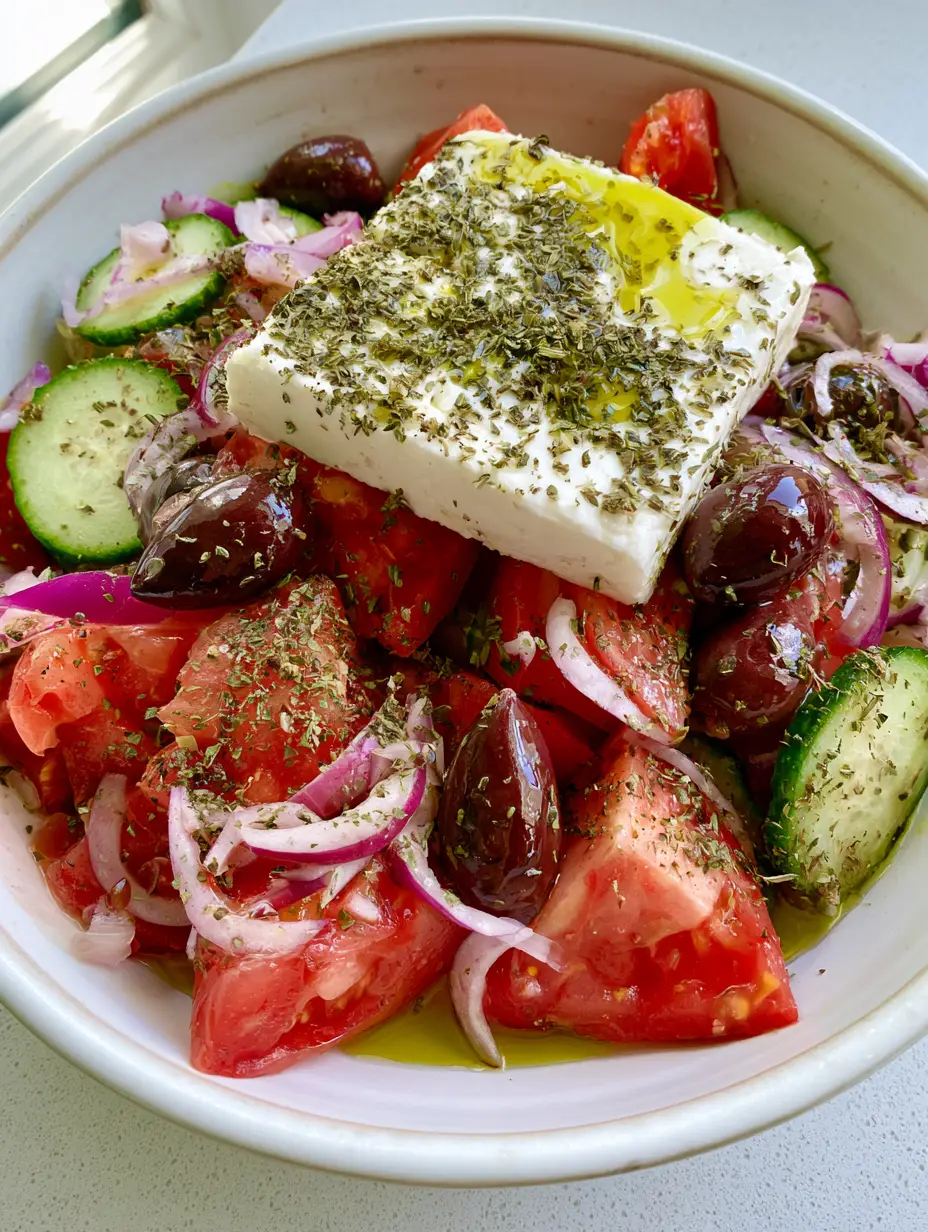
Authentic Greek Horiatiki Salad: The Traditional Village Recipe
Ingredients
Equipment
Method
- Cut the ripe tomatoes into large, jagged wedges. Avoid making them too small; the rustic size is essential.
- Slice the unpeeled Persian cucumbers into thick rounds, approximately 1/2 inch thick.
- Halve the red onion and slice into very thin, crescent-shaped arcs.
- In a shallow white ceramic bowl, toss together the tomato wedges, cucumber rounds, red onion, and whole Kalamata olives.
- Place the whole slab of feta cheese directly on top of the salad mound.
- Drizzle the olive oil generously over the vegetables and feta. Finish with a heavy dusting of dried oregano and a pinch of salt.
Notes
Use high-quality Greek extra virgin olive oil to ensure the traditional peppery finish.
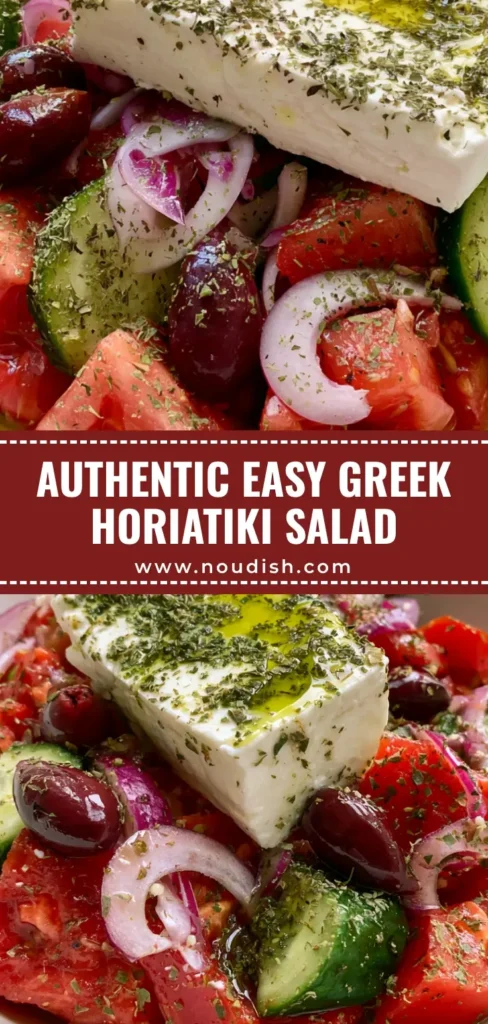
Join the Noudish Community!
Did you make this Authentic Greek Horiatiki Salad? We want to see your rustic creations! Save this recipe to your Mediterranean Recipes board on Pinterest so you never lose it. Follow @Noudish_Recipes for more high-protein, visually stunning meals that bring the world to your kitchen.
Don’t forget to leave a 5-star rating in the recipe card above and upload a photo of your salad in the comments below. Your feedback helps our community grow and inspires other home cooks to master the art of the Greek Village Salad!