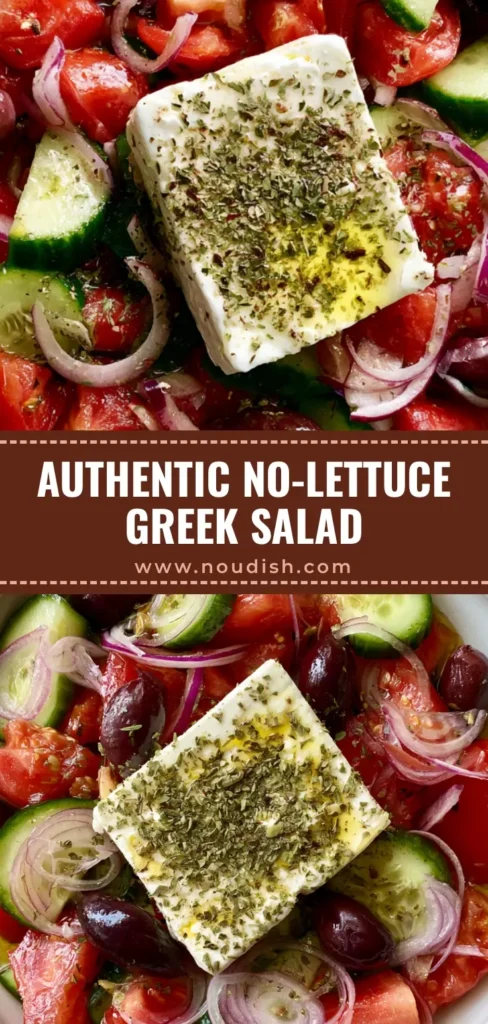
There is nothing quite like a true Authentic Greek Salad to transport your senses straight to a sun-drenched taverna on the Mediterranean coast. Known in Greece as “Horiatiki,” this village-style salad is the epitome of summer on a plate. It’s a vibrant, rustic masterpiece that relies on the absolute peak of seasonal produce and high-quality fats to create a flavor profile that is both sharp and incredibly refreshing.
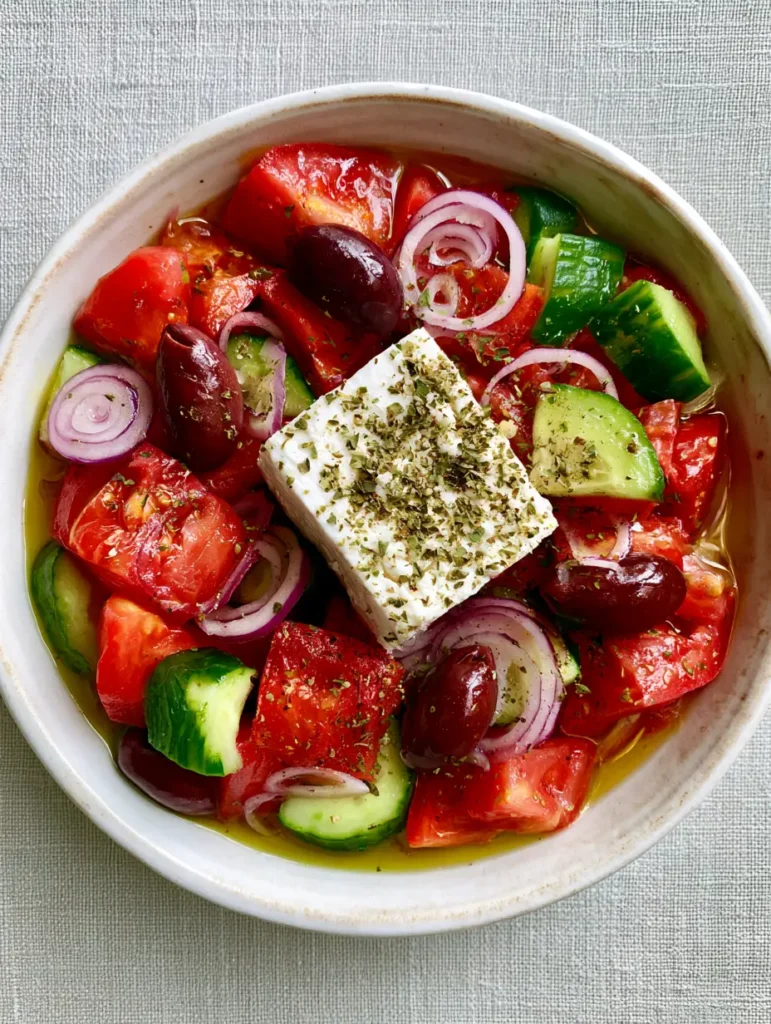
When you see this Authentic Greek Salad, you immediately notice what is missing: lettuce. Traditional Greek salads never contain leafy greens. Instead, they celebrate the crunch of unpeeled cucumbers, the juiciness of vine-ripened tomatoes, and the creamy, salty bite of a solid block of sheep’s milk feta. This recipe is designed to be visually stunning, perfectly mirroring the rustic elegance found in the heart of Greece.
Why This Traditional Horiatiki Recipe Works
- Vibrant Visual Textures: Irregularly chunked tomatoes and translucent red onion moons create a beautiful, “messy-on-purpose” aesthetic that looks incredible on Pinterest.
- Zero-Cook Simplicity: This dish requires no heat, making it the perfect quick lunch or side for a warm evening.
- Scientifically Balanced: The high acidity of the tomatoes and red wine vinegar is perfectly cut by the rich, golden extra virgin olive oil and the creamy feta.
- Authentic Presentation: By serving the feta as a whole rectangular block, you preserve the traditional village style and allow guests to break off exactly how much they want.
Looking to build a full Mediterranean spread? This salad pairs beautifully with our Greek Chicken Gyros or even a savory Zucchini Spinach Feta Casserole.
Essential Ingredients for the Perfect Village Salad
To achieve a truly Authentic Greek Salad, the quality of your ingredients is the most important factor. Since there are so few components, each one must be exceptional.
Vine-Ripened Tomatoes: Use large, juicy tomatoes that are room temperature. They should be cut into large, irregular chunks to catch the oil and juices. 3 large tomatoes (approx. 500g) provide the base of the salad.
Unpeeled Cucumbers: Use Persian or English cucumbers. Keeping the skin on is essential for that signature crunch and vibrant green contrast. You’ll need 1 large cucumber (approx. 300g), sliced into thick half-moons.
Red Onion: These provide a sharp, pungent bite. They must be sliced into very thin, translucent half-moons to ensure they don’t overpower the other flavors. Use 1/2 small red onion (approx. 50g).
Kalamata Olives: Look for whole, dark purple olives preserved in brine. Keeping them whole is the traditional way and prevents the salad from becoming too salty. 1/2 cup (75g) is ideal.
The Feta Block: Never use pre-crumbled feta. Buy a high-quality block of Greek feta (sheep’s milk is best) and place a solid 7oz (200g) rectangular block right on top.
Extra Virgin Olive Oil (EVOO): This is the “dressing.” Use a high-quality, cold-pressed oil that has a peppery finish. You’ll drizzle about 3-4 tablespoons (45-60ml) over the final assembly.
Dried Oregano: Greek oregano is more savory and less sweet than Mexican oregano. Use fine flakes to dust the feta and the vegetables. 1 teaspoon (2g) is plenty.
Step-by-Step Instructions for Your Authentic Greek Salad
1. Prepare the Rustic Vegetable Base
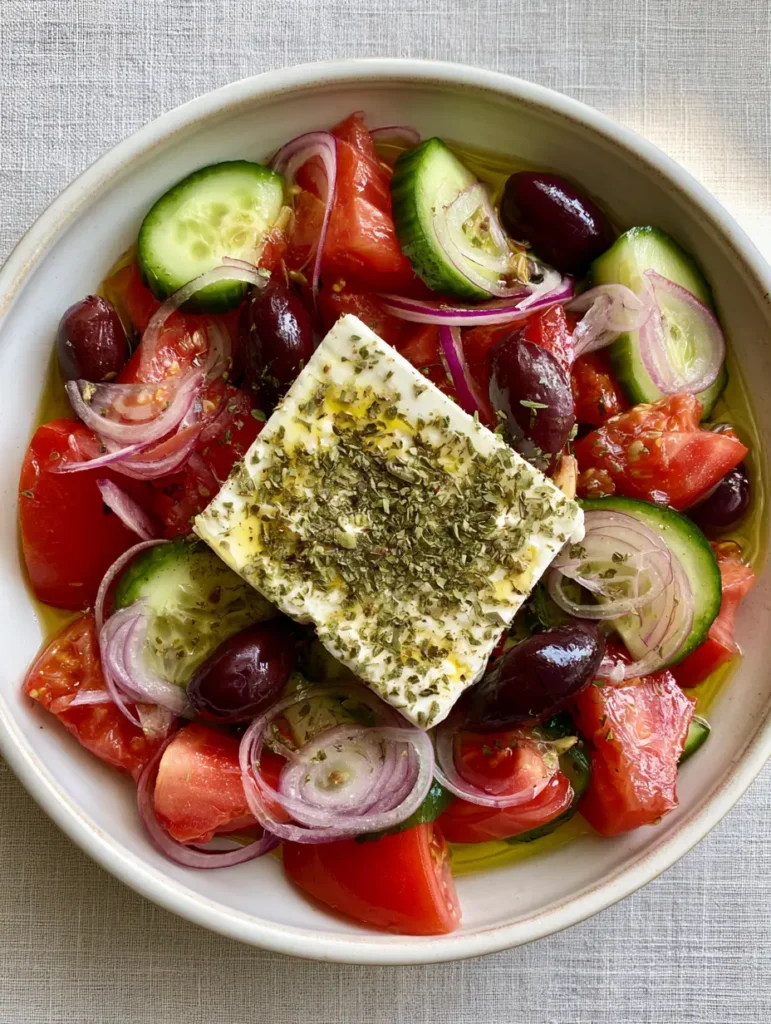
Start by washing your produce thoroughly. Take your 3 large vine-ripened tomatoes and cut them into irregular, bite-sized chunks. Avoid making them too uniform; the beauty of a Authentic Greek Salad is its rustic, “village” look.
Next, take your cucumber. Do not peel it! Slice it down the middle lengthwise, then cut it into thick, 1/2-inch (1.25cm) slices. Place both the tomatoes and cucumbers into a rustic, shallow white ceramic bowl.
2. Add the Aromatics and Olives
Slice your red onion into paper-thin, translucent half-moons. Scatter these over the tomatoes and cucumbers. The thinness of the onion allows it to soften slightly when it hits the tomato juices and olive oil.
Add 1/2 cup (75g) of whole Kalamata olives. Do not pit them if you want to be truly authentic, but do warn your guests! The dark purple color adds a stunning visual depth against the red and green vegetables.
3. The Feta Centerpiece and Seasoning
Place your solid, rectangular block of feta cheese directly in the center of the bowl. It should sit prominently on top of the vegetables. This is the visual hallmark of the Authentic Greek Salad.
Drizzle 3-4 tablespoons (45-60ml) of high-quality extra virgin olive oil over the entire bowl, ensuring the feta and the vegetables are glistening. Sprinkle 1 teaspoon (2g) of dried oregano flakes over the top, focusing a heavy dusting on the block of feta. Add a pinch of sea salt, but be careful—the olives and feta are already quite salty.
Expert Tips for Success
- Temperature Matters: Never serve this salad ice-cold. Let the tomatoes sit at room temperature to release their full aroma and sweetness.
- The Oil Quality: Since there is no complicated vinaigrette, the flavor of your olive oil will define the dish. Use the best “finishing” oil you have.
- No Vinegar? While some regions add a splash of red wine vinegar, a truly ripe tomato provides enough natural acidity. If your tomatoes are out of season, a teaspoon of red wine vinegar can help.
- The “Sop” Factor: The best part of a Authentic Greek Salad is the juice at the bottom of the bowl (called “papara”). Serve with crusty bread to soak it up!
Storage and Make-Ahead Advice
An Authentic Greek Salad is best enjoyed immediately after assembly. As the tomatoes sit with the salt and oil, they will release a lot of water. While this “salad juice” is delicious, the vegetables will lose their crispness after about 2 hours.
If you must prepare it ahead of time, chop the vegetables but do not add the salt, oil, or feta until you are ready to serve. Do not freeze this salad, as the high water content in the cucumbers and tomatoes will cause them to turn into mush upon thawing.
What to Serve With This Salad
This salad is versatile enough to be a light lunch or a heavy side. It pairs wonderfully with grilled meats like our Chicken Street Tacos (for a fusion twist) or a classic Grilled Cod with Dill Sauce. For a vegetarian feast, serve it alongside a Cowboy Cream Cheese board and warm pita bread.
Frequently Asked Questions
Yes, green bell peppers are a common and authentic addition in many regions of Greece, adding an extra layer of crunch and a slight bitterness.
No, a traditional Greek salad (Horiatiki) never contains lettuce or leafy greens. It is strictly composed of tomatoes, cucumbers, onions, olives, and feta cheese.
Authentic recipes usually leave the cucumbers unpeeled. This provides a necessary structural crunch and adds a vibrant green color to the dish.
There is no separate dressing. The ‘dressing’ is created naturally as the juices of the tomatoes mix with high-quality extra virgin olive oil and a sprinkle of dried oregano.
In Greece, serving feta as a whole block is a sign of quality and tradition. It allows the diner to break off pieces as they eat, preserving the texture of the cheese.
The Ultimate Authentic Greek Salad Recipe
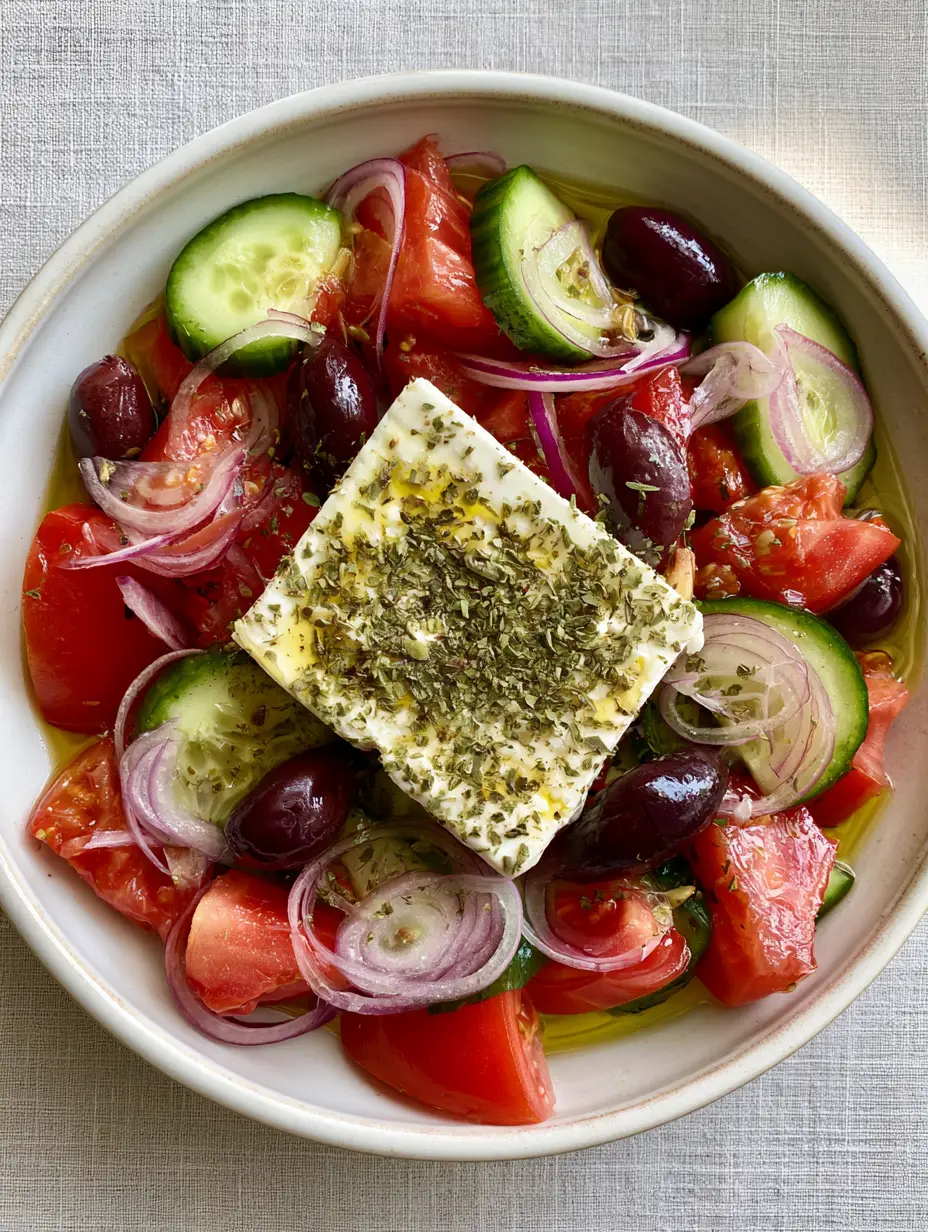
Authentic Greek Salad (Traditional Horiatiki Recipe)
Ingredients
Equipment
Method
- Place the chunked tomatoes and thick-sliced unpeeled cucumbers into a shallow bowl.
- Scatter the thin red onion moons and whole Kalamata olives over the vegetable base.
- Place the solid block of feta cheese prominently in the center of the salad.
- Drizzle the entire salad with extra virgin olive oil and generously dust the feta with dried oregano and a pinch of salt.
Notes
Serve with crusty bread to soak up the juices at the bottom of the bowl.
Save This Recipe to Pinterest!
If you love this Authentic Greek Salad, don’t forget to save it to your “Healthy Recipes” or “Mediterranean Diet” board on Pinterest! Following Noudish_Recipes helps us keep the kitchen running. If you make this dish, snap a photo and share it in the comments below—we love seeing your rustic creations! Please leave a 5-star rating if this recipe brought a taste of Greece to your home.