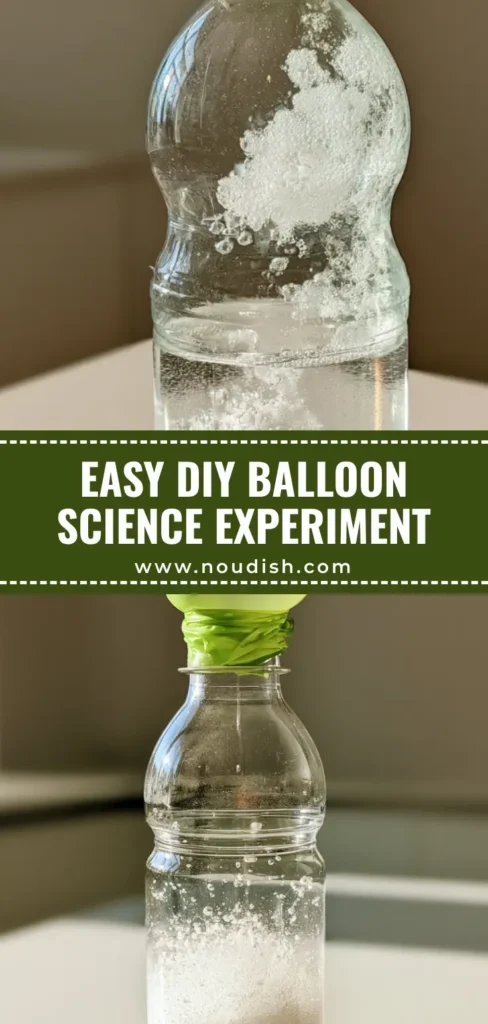
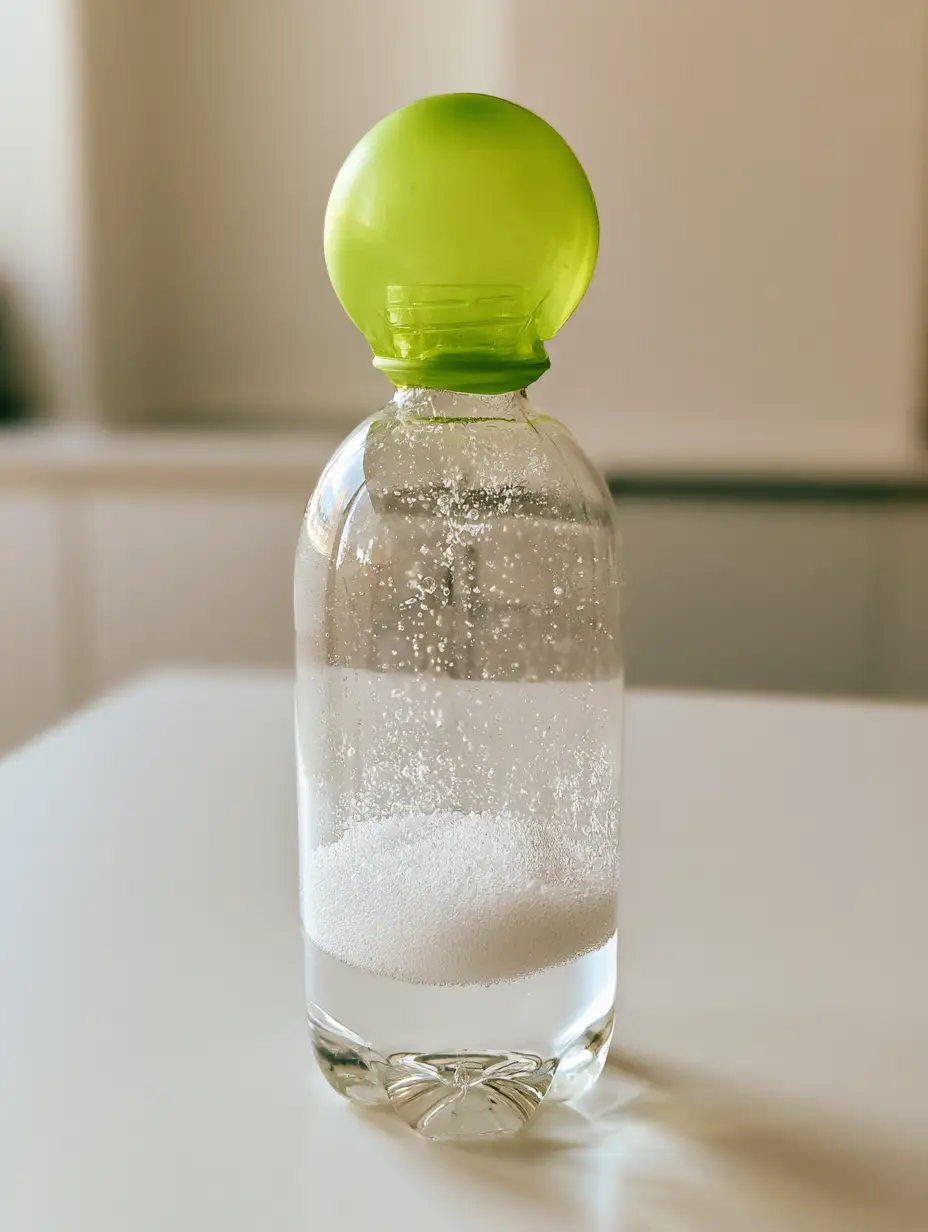
The Baking Soda Balloon Experiment is the ultimate kitchen science activity that combines the “wow” factor of a chemical reaction with the simplicity of household staples. If you are looking for a way to entertain the kids while teaching them the basics of chemistry, this classic experiment is a must-try. This Baking Soda Balloon Experiment is visually stunning, especially when you see that bright green latex balloon begin to expand all on its own atop a clear plastic bottle. The fizzing white bubbles of the vinegar and soda reaction never fail to elicit gasps of excitement from “mini-scientists” and adults alike.
Whether you are a homeschool parent, a teacher looking for a classroom demo, or just a bored foodie with extra vinegar in the pantry, this activity is perfect. It’s fast, mess-free (if you’re careful!), and provides a high-impact visual that is perfect for sharing on social media. After you finish blowing up balloons with science, you might want to settle down for a real meal with some Greek Chicken Gyros or a hearty Loaded Chicken Club Sandwich.
Why This Science Experiment Is a Pinterest Favorite
- High Visual Contrast: The stark white baking soda powder against the clear vinegar and the vibrant green balloon creates a thumb-stopping aesthetic.
- Instant Gratification: Unlike many science projects, the Baking Soda Balloon Experiment happens in seconds, keeping even the shortest attention spans engaged.
- Educational Depth: It’s a literal “hands-on” lesson in endothermic reactions and gas expansion that children will actually remember.
- Minimal Cleanup: Using a clear plastic water bottle means most of the reaction is contained, making it a “low-stress” activity for parents.
Essential Supplies for Your Chemical Reaction
To ensure your Baking Soda Balloon Experiment works perfectly every time, you need the right tools. We are using standard kitchen measurements to keep things consistent.
- 1 Small Clear Plastic Bottle (approx. 16.9 oz / 500ml): This allows you to see the white fizzy bubbles clearly as they rise. A recycled water bottle works best.
- 1/2 cup (120ml) Distilled White Vinegar: The acid component. Clear vinegar ensures you can see the bubbling reaction without any murky colors.
- 2 tablespoons (30g) Baking Soda: The base component. Ensure your white baking soda powder is fresh for the strongest “pop.”
- 1 Green Latex Balloon: A 9-inch (23cm) balloon is the ideal size for the neck of a standard water bottle.
- Small Funnel: Crucial for getting the white powder into the inflated balloon neck without making a mess.
- Measuring Cup and Spoons: For precise scientific accuracy.
How to Conduct the Baking Soda Balloon Experiment
Follow these steps closely to ensure the balloon neck stays secure and the reaction is contained within the clear plastic bottle.
Preparing the Acid Base
First, take your clear plastic water bottle and ensure it is completely dry on the outside for a good grip. Use a measuring cup to pour 1/2 cup (120ml) of clear vinegar into the bottle. You will notice the liquid sits at the bottom, looking innocent—but it’s ready to react. While you set this aside, you might find yourself getting hungry; if so, consider prepping some Mediterranean Pasta Salad for a healthy snack later.
Loading the Balloon
Stretch the green latex balloon a few times to loosen the rubber. Place the funnel into the neck of the balloon. Carefully pour 2 tablespoons (30g) of white baking soda powder through the funnel and into the body of the balloon. Shake the balloon gently to ensure all the powder settles at the bottom. The balloon neck should remain clear of powder for now.
The Critical Connection
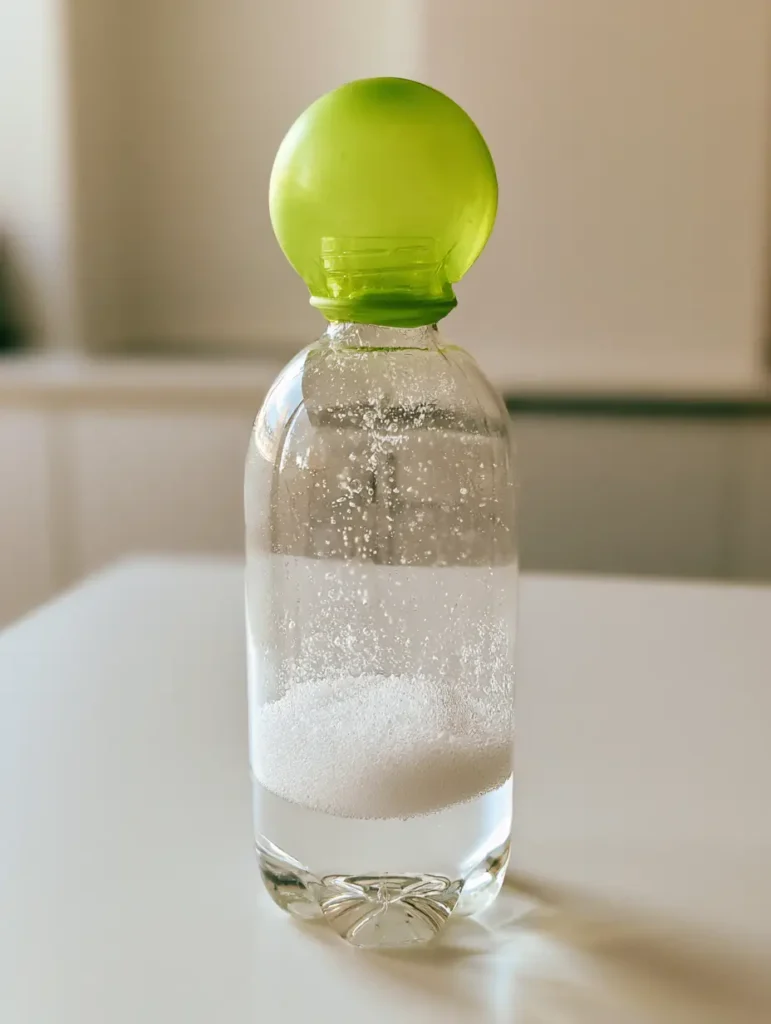
This is where precision matters. Carefully stretch the green latex balloon neck over the mouth of the clear plastic bottle. Do NOT let the white powder fall into the vinegar yet. Ensure the balloon is centered and the seal is tight. If the seal is loose, the carbon dioxide will escape, and your balloon won’t inflate. If you’re hosting a science-themed party, these experiments pair wonderfully with finger foods like Garlic Bread Grilled Cheese.
The Grand Inflation
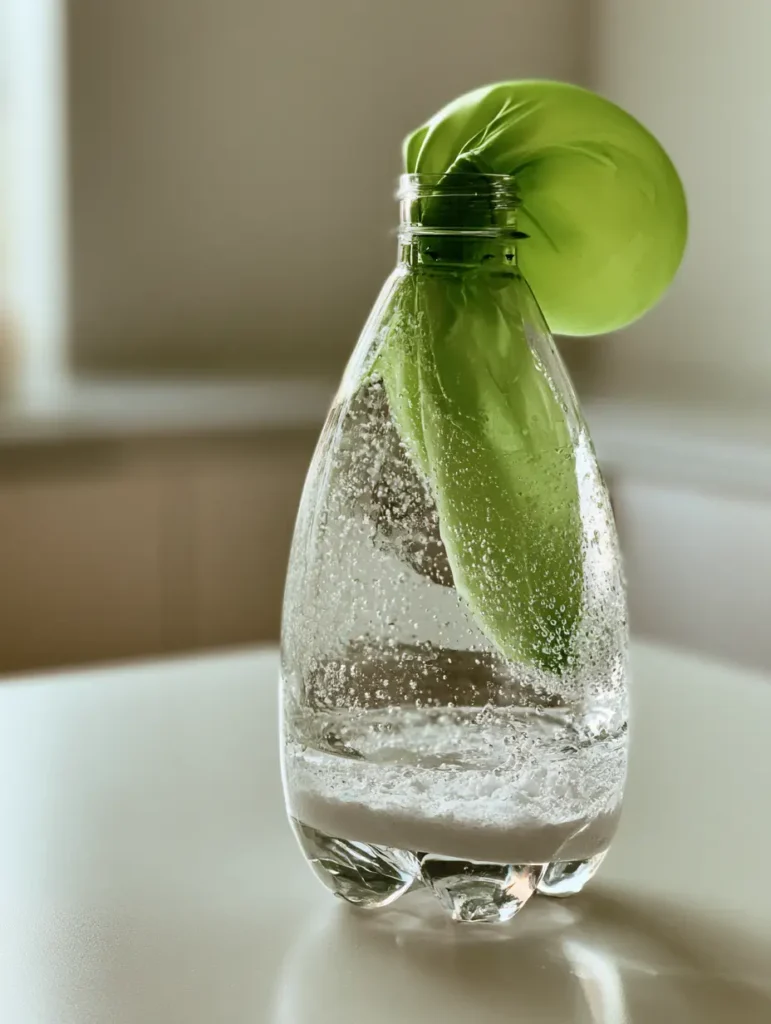
Once the seal is secure, lift the balloon up so the white baking soda powder falls directly into the clear vinegar. Immediately, you will see a violent reaction of white fizzy bubbles. The clear plastic bottle will feel cold to the touch as the CO2 gas expands rapidly. Watch as the green latex balloon begins to grow, standing upright and becoming a partially inflated balloon in seconds!
Expert Tips for the Perfect Inflation
- Check Your Ratios: If the balloon doesn’t inflate fully, you may need more white baking soda powder. Too much, however, can cause the white fizzy bubbles to overflow into the balloon itself.
- Temperature Matters: Using slightly warm vinegar can speed up the reaction, creating a faster “inflation” that looks even better on camera.
- Avoid Clogs: If the white powder clumps in the balloon neck, gently flick the rubber to release it into the bottle.
- Seal Security: If you hear a “hissing” sound, your seal isn’t tight. Hold the base of the balloon against the bottle rim with your thumb and forefinger.
- Double the Fun: Try different colors of balloons to see if the weight of the latex affects the inflation speed!
The Science Behind the Bubbles
The Baking Soda Balloon Experiment is a classic example of an acid-base reaction. Vinegar (acetic acid) reacts with baking soda (sodium bicarbonate) to create carbonic acid, which is unstable and immediately breaks down into water and carbon dioxide (CO2). It is the CO2 gas that creates the white fizzy bubbles and travels upward to fill the green latex balloon. Because gas takes up more space than solids or liquids, it has nowhere to go but up, inflating the balloon until the pressure stabilizes.
Pairing Your Science With Snacks
Science is hard work! Once the bubbles settle, it’s time to eat. Since this experiment is all about “reacting” and “mixing,” why not try some recipes that use similar chemistry, like the rise of the crust in Creamy Garlic Chicken Thighs served with crusty bread, or perhaps a sweet treat like Peanut Butter Lasagna (coming soon) for a reward after a job well done?
Cleanup and Safety
While the Baking Soda Balloon Experiment is generally safe, it’s important to keep a few things in mind. Vinegar is an acid and can sting if it gets into eyes. Always supervise children during the “Grand Inflation” phase. To clean up, simply pour the neutralized liquid down the drain and rinse the clear plastic bottle for recycling. If you’re looking for more “low-mess” kitchen ideas, our Chicken Street Tacos are a great way to feed a crowd without a mountain of dishes.
Frequently Asked Questions
Yes, any vinegar containing acetic acid will work. However, white vinegar is preferred for the Baking Soda Balloon Experiment because its clarity allows you to see the bubbles better.
A smaller bottle (500ml) is better because the gas fills the space quickly and moves into the balloon faster. A very large bottle may require more vinegar and soda to achieve the same inflation.
The balloon will stay inflated as long as the seal is tight, but it will eventually deflate as the CO2 gas molecules seep through the porous latex over several hours.
Yes, the gas is carbon dioxide (CO2), the same gas we breathe out and that makes soda fizzy. It is non-toxic, but you should still perform the experiment in a ventilated area.
The most common reason is a leak in the seal between the balloon neck and the bottle. Ensure the latex is stretched tightly over the rim. Also, check that your baking soda is fresh.
The Ultimate Baking Soda Balloon Experiment Recipe
Baking Soda Balloon Experiment: Easy DIY Science for Kids
Ingredients
Equipment
Method
- Pour 1/2 cup (120ml) of clear vinegar into the clear plastic bottle using a funnel if needed.
- Using a clean dry funnel, pour 2 tablespoons (30g) of white baking soda powder into the green latex balloon.
- Carefully stretch the balloon neck over the bottle opening without dropping the powder in yet.
- Lift the balloon up to dump the powder into the vinegar. Watch the white fizzy bubbles inflate the balloon!
Notes
Hold the neck of the balloon firmly to prevent gas leaks.
Save This Experiment for Later!
Did your green latex balloon reach massive proportions? We want to see your results! Please save this experiment to your “Kids Activities” or “Science Projects” board on Pinterest so you can find it whenever the “I’m bored” complaints start. Follow Noudish_Recipes for more fun kitchen hacks and delicious family meals. If you tried this, leave a 5-star rating and upload a photo of your inflated balloon in the comments below!