Homemade Mango Mochi is the ultimate refreshing summer treat that combines the chewy, elastic texture of steamed glutinous rice flour with a vibrant, juicy center. If you have been scrolling through Pinterest looking for that perfect “pale pastel yellow” aesthetic, this recipe delivers both professional visual appeal and authentic flavor. This isn’t just a dessert; it is a sensory experience involving soft, matte-finished dough and a surprising burst of fresh chilled fruit.
Creating Homemade Mango Mochi at home allows you to control the sweetness and ensure you are using the ripest, deep-orange mangos available. Unlike store-bought versions that can be rubbery, this version features a thin, delicate skin and a luscious coconut cream layer that balances the natural acidity of the fruit. Whether you are a seasoned pastry chef or a curious home cook, this guide will walk you through the steaming and shaping process to achieve that iconic “handheld smartphone photo” quality every single time.
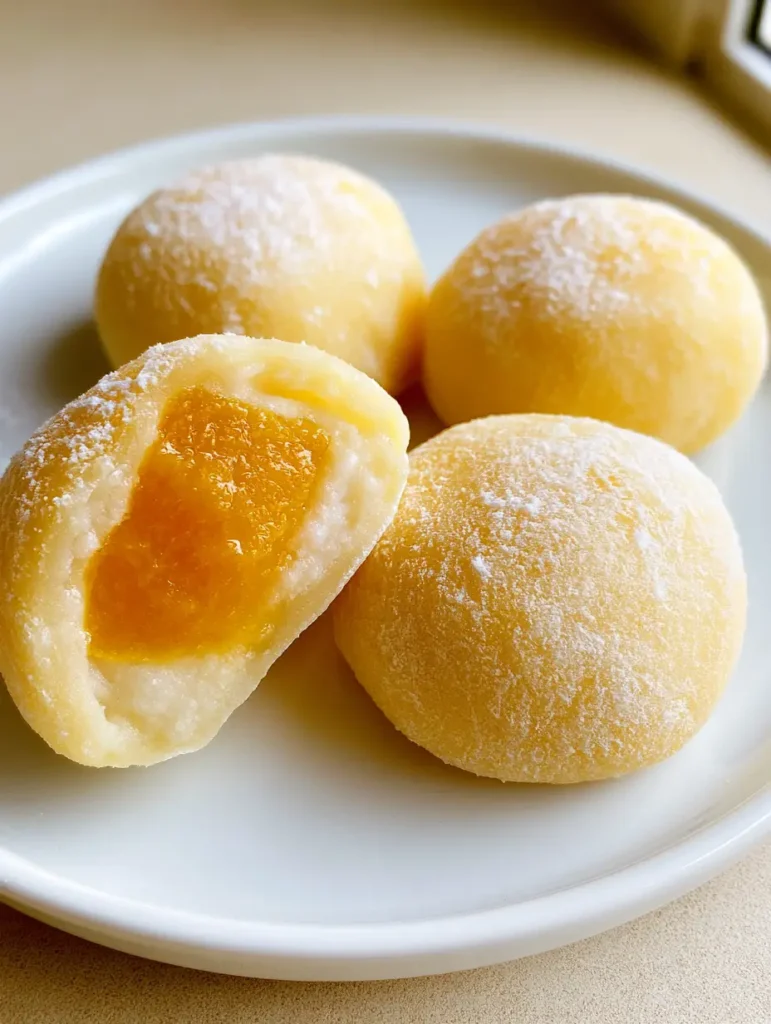
Why You Will Love This Vibrant Mango Dessert
- Perfectly Elastic Texture: The dough is steamed to achieve a translucent, soft, and stretchy consistency that melts in your mouth.
- Tropical Flavor Profile: The combination of fresh mango and sweet coconut cream filling creates a high-end flavor profile reminiscent of tropical vacations.
- Matte Aesthetic: A fine dusting of cornstarch gives these treats a sophisticated, minimalist look that pops against any white ceramic plate.
- Naturally Gluten-Free: Using glutinous rice flour makes this a crowd-pleasing option for those with dietary restrictions without sacrificing any decadence.
Essential Ingredients for Soft Homemade Mango Mochi
To achieve the professional results seen in the Noudish_Recipes kitchen, you need high-quality ingredients. Each component plays a specific role in the structural integrity and taste of the final product.
- Glutinous Rice Flour (Mochiko): 1 ½ cups (200g). This is the foundation of the dough. It provides the signature “chew” that standard rice flour cannot replicate.
- Cornstarch: ½ cup (60g). Used primarily for dusting. It prevents the sticky dough from adhering to your hands and gives the mochi its matte, smooth exterior.
- Granulated Sugar: ¼ cup (50g). Sweetens the dough slightly to complement the fruit without being overpowering.
- Full-Fat Coconut Milk: ¾ cup (180ml). Used in the dough for a subtle richness and tropical aroma.
- Fresh Ripe Mango: 2 large mangos. Look for honey mangos or Ataulfo mangos for that vibrant, juicy, deep orange interior.
- Heavy Coconut Cream: ½ cup (120ml). Chilled and whipped slightly with 1 tablespoon of powdered sugar to create the sweet coconut cream filling.
- Yellow Food Coloring: 1 drop (optional). To achieve that pale pastel yellow hue mentioned in our visual blueprint.
Before you dive into the sweets, if you are planning a full menu, consider starting with a light high protein chickpea salad to balance the indulgence of the mochi.
Step-by-Step Instructions for the Perfect Mochi Dough
Preparing the Mango and Cream Centers
Start by peeling your mangos and cutting them into uniform 1-inch (2.5cm) cubes. Place these on a tray and chill them in the refrigerator for at least 30 minutes. Cold mango is easier to wrap and creates that desirable “slight condensation” on the fruit when sliced. While the fruit chills, whisk your thickened coconut cream until it holds a soft peak. Keep this chilled until the exact moment of assembly.
Mixing the Pastel Yellow Dough
In a microwave-safe glass bowl, whisk together the glutinous rice flour, sugar, and coconut milk until the batter is completely smooth. If you are using food coloring, add one tiny drop now. The color should be a very pale pastel yellow. Strain the mixture through a fine-mesh sieve to ensure there are no lumps, as any dry flour pockets will ruin the elasticity of the Homemade Mango Mochi.
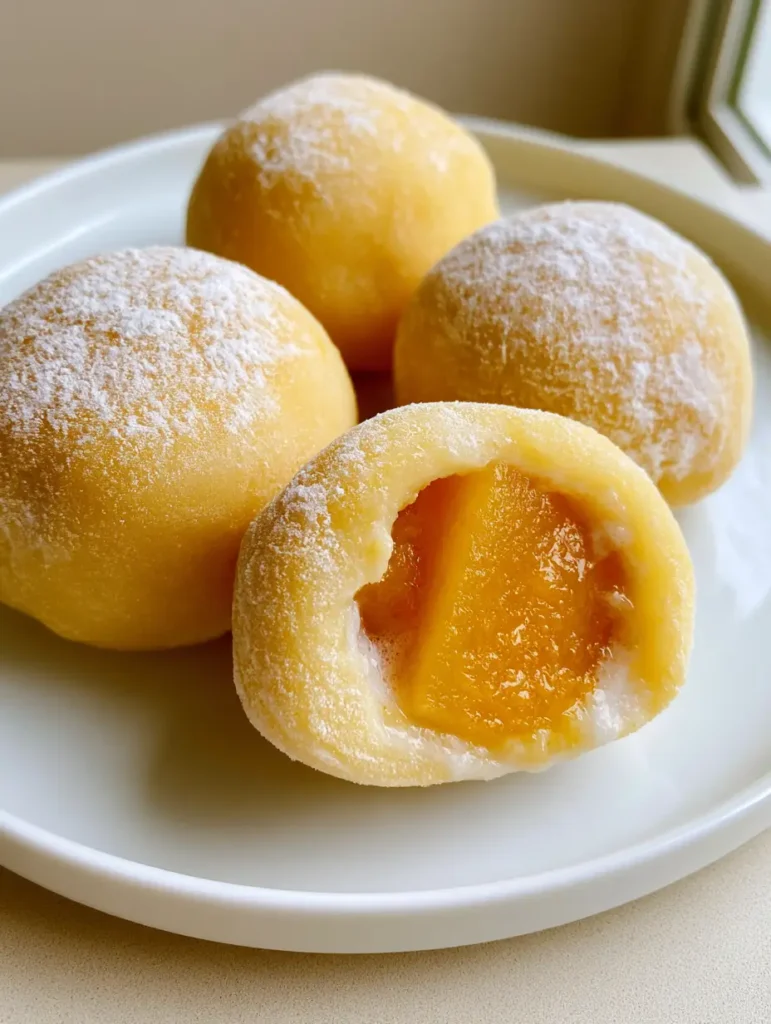
Steaming to Translucent Perfection
Cover the bowl with plastic wrap and poke a few holes for steam to escape. Microwave on high for 2 minutes. Remove and stir with a wet spatula. The dough will be patchy. Microwave for another 1 minute until the dough looks translucent rather than opaque. If you prefer the stovetop, steam the covered bowl in a bamboo steamer for 15-20 minutes. The dough is ready when it is incredibly sticky, shiny, and cohesive.
If you enjoy the process of working with dough, you might also find our ham and cheese puff pastry recipe a fun weekend project for savory cravings.
The Folding and Cooling Process
Transfer the hot dough onto a surface heavily dusted with cornstarch. Use a bench scraper to fold the dough over itself a few times. This incorporates air and develops the “pull.” Let it cool until it is safe to handle but still warm. Warm dough is significantly more pliable than cold dough, which is the secret to a thin, even skin.
Professional Techniques for Shaping and Filling
Divide the dough into 6-8 equal portions. Flatten a portion into a disk, making the edges thinner than the center. Place a small dollop of the sweet coconut cream filling in the center, followed by a chilled mango cube. Carefully pinch the opposite edges of the dough together over the mango, sealing it tightly.
Visual Cue: The dough should stretch easily without tearing. If it feels too sticky, dip your fingers in more cornstarch. Once sealed, roll the mochi between your palms to create a perfectly round, soft sphere. Brush off any excess starch with a soft pastry brush to maintain that smooth, matte finish.
For a complete “street food at home” vibe, try serving these after a batch of homemade corn dog bites for a nostalgic meal.
Expert Tips for Mochi Success
- Use a Scale: For the most consistent Homemade Mango Mochi, measure your flour in grams. Volume measurements for rice flour can vary wildly depending on how it’s packed.
- Keep it Covered: Mochi dough dries out in minutes. Keep your unused dough portions under plastic wrap or a damp cloth while you work on one piece.
- The “Pinched” Seal: Ensure no coconut cream touches the edges of the dough where you are trying to seal it, or the mochi will slide open.
- Chill Before Serving: While you can eat them immediately, chilling the finished mochi for 20 minutes sets the cream and makes the vibrant, juicy mango center even more refreshing.
Storage and Freshness Guidelines
Homemade Mango Mochi is best enjoyed within 24 hours. Because the dough contains no preservatives, it will eventually begin to harden as the starch molecules re-crystallize.
- Refrigeration: Store in an airtight container. If they become slightly firm, let them sit at room temperature for 10 minutes before eating to regain their softness.
- Freezing: You can freeze these for up to 2 weeks. Wrap each mochi individually in plastic wrap. Thaw in the fridge for 2 hours before serving. Note that the fresh mango texture may change slightly upon thawing.
What to Serve With Mango Mochi
This dessert is inherently light and fruity, making it the perfect palate cleanser. Pair it with a hot cup of Matcha or a floral Jasmine tea. If you are hosting a summer dinner party, serve these after a main course of mediterranean pasta salad or a savory garlic bread grilled cheese for a fun “high-low” dining experience.
Frequently Asked Questions
No, you must use glutinous rice flour (like Mochiko). Regular rice flour does not have the starch content required to create the elastic, chewy texture characteristic of mochi.
Add a single drop of yellow gel food coloring to the liquid mixture before steaming. You can also replace a tablespoon of coconut milk with mango puree for a natural tint.
Mochi is best eaten within 24 hours. After that, the starch begins to harden. You can prolong softness slightly by keeping it in a strictly airtight container at room temperature.
When shaping, ensure you roll or press the dough disks very thin, especially at the edges. The dough should be almost translucent when wrapped around the mango.
Mochi dough is naturally very sticky. The secret is to use plenty of cornstarch on your hands and work surface. You can also try lightly oiling your spatula.
The Ultimate Homemade Mango Mochi Recipe
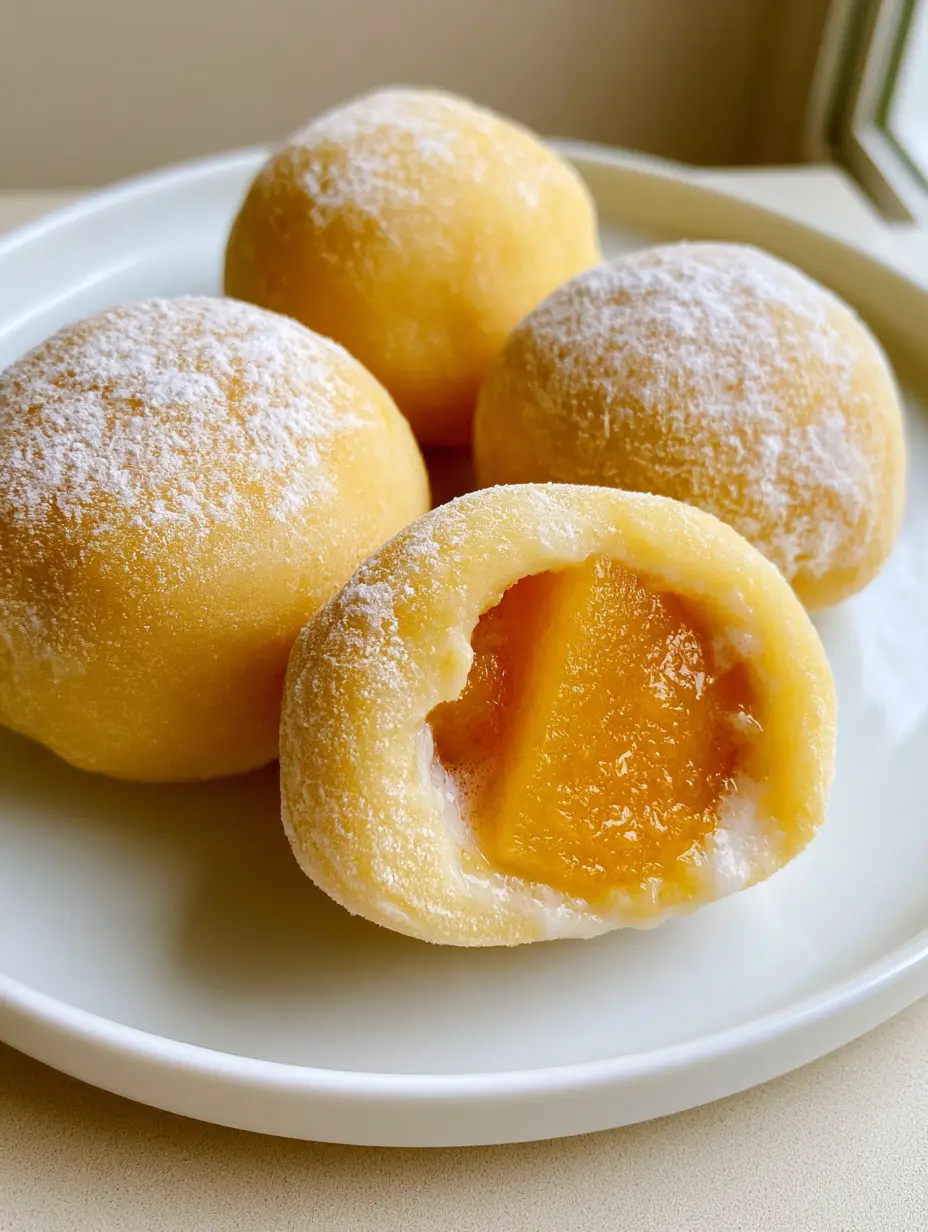
Homemade Mango Mochi with Sweet Coconut Cream
Ingredients
Equipment
Method
- Cut fresh mango into 1-inch cubes and chill in the refrigerator for 30 minutes to ensure a firm, juicy center.
- Whisk chilled coconut cream until it reaches soft peaks. Keep refrigerated until assembly.
- Whisk glutinous rice flour, sugar, and coconut milk in a bowl. Sieve to remove lumps.
- Cover and microwave for 2 minutes, stir, then microwave for another 1 minute until translucent and sticky.
- Dust dough with cornstarch, flatten into disks, add cream and a mango cube, then pinch edges to seal.
Notes
Keep dough covered at all times to prevent it from drying out.

Save This Recipe to Pinterest!
Did you fall in love with the soft, elastic texture of this Homemade Mango Mochi? Don’t lose the recipe! Pin this to your Desserts or Asian-Inspired Recipes board so you can make it whenever the mango cravings hit.
We love seeing your kitchen creations! If you make these, follow Noudish_Recipes on Pinterest and upload a photo of your mochi in the comments below. Nothing makes us happier than seeing those vibrant orange centers! Please leave a 5-star rating if you enjoyed the recipe—it helps our community grow.