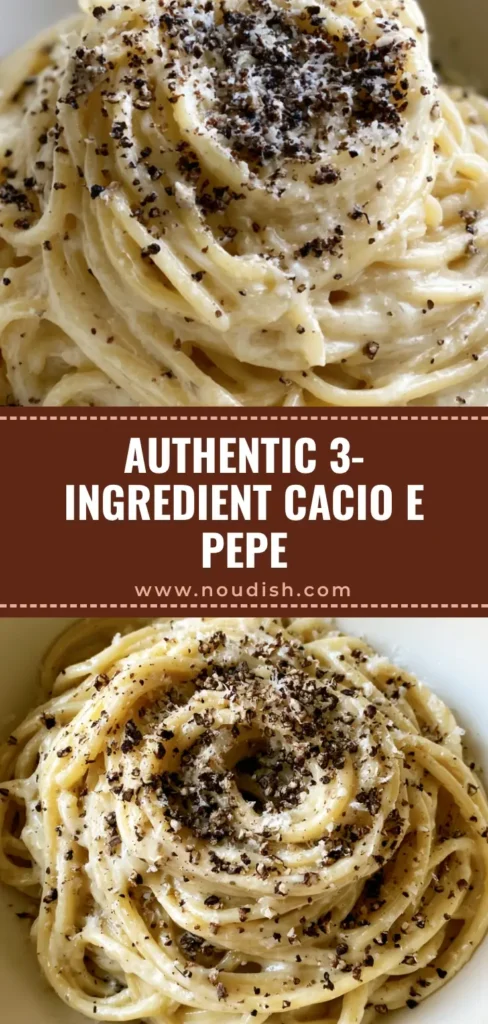
This Cacio e Pepe Recipe is the gold standard for minimalist Italian comfort food. With just three primary ingredients—high-quality pasta, sharp Pecorino Romano, and pungent black pepper—you can create a restaurant-quality masterpiece in your own kitchen. This isn’t just a quick dinner; it’s a masterclass in emulsification that results in a thick, glossy, pale-ivory sauce that clings to every strand of al dente spaghetti.
Whether you are a seasoned chef or a home cook looking for a viral-worthy meal, this Cacio e Pepe Recipe delivers a sensory explosion. The aroma of toasted peppercorns filling your kitchen paired with the sight of a tall, elegant swirl of noodles is enough to make anyone’s mouth water. We’ve perfected the technique to ensure your cheese never clumps, leaving you with a silky finish every single time.
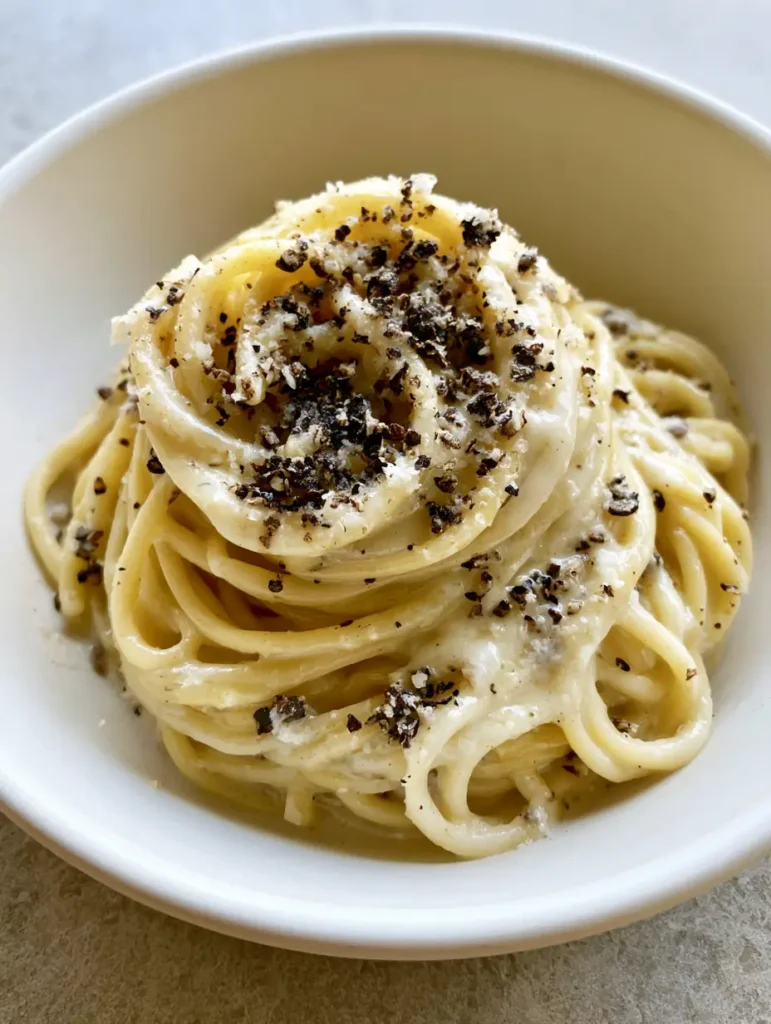
Why This Authentic Roman Classic Is a Total Game Changer
- Unmatched Texture: Experience a perfectly emulsified Pecorino Romano cheese sauce that is glossy, thick, and never grainy.
- Visual Elegance: A tall swirl of spaghetti served in a matte-white bowl creates a high-end aesthetic perfect for your next dinner party.
- Bold Flavor Profile: The use of coarsely cracked black pepper kernels provides a spicy, earthy bite that balances the salty richness of the cheese.
- Simple Ingredients: You likely already have everything needed for this Cacio e Pepe Recipe in your pantry right now.
Essential Pantry Staples for a Glossy Sauce
Success starts with the quality of your ingredients. Because there are so few components, each one must be of the highest caliber to achieve the flavor profile expected from a traditional Cacio e Pepe Recipe.
Spaghetti or Tonnarelli: Use a high-quality, bronze-cut pasta. The rough surface of bronze-cut noodles releases more starch, which is the secret “glue” for your sauce. You’ll need 12 oz (340g) for a generous serving.
Pecorino Romano Cheese: You need 1.5 cups (150g) of finely grated Pecorino Romano. This sheep’s milk cheese is salty and tangy. Avoid pre-shredded versions; they contain anti-caking agents that will cause your sauce to clump.
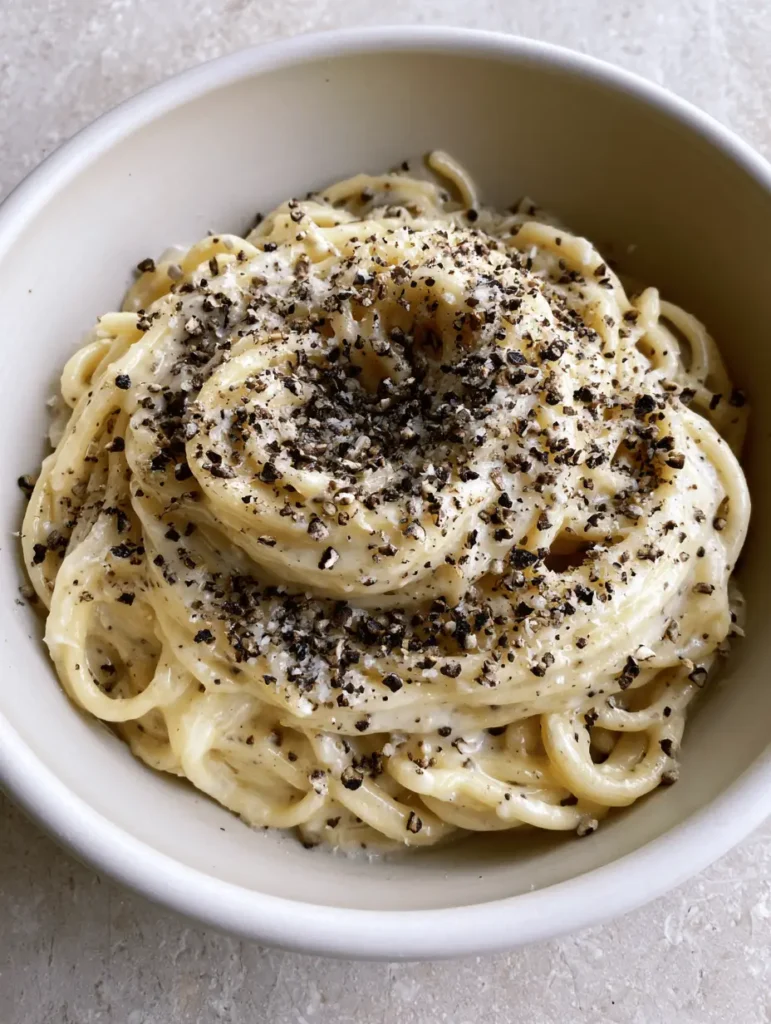
Whole Black Peppercorns: To get those beautiful, irregularly cracked kernels seen in the Cacio e Pepe Recipe visuals, use 2 tablespoons (12g) of whole peppercorns crushed in a mortar and pestle or a heavy pan. If you enjoy bold flavors, you might also like the kick in our cowboy butter recipe.
Pasta Water: This is the “liquid gold” of Italian cooking. The starchy water is essential for creating the ivory-colored emulsion that coats the noodles. Never drain it all away!
Sea Salt: Use 1 tablespoon (15g) for the pasta water. Be cautious, as the Pecorino is naturally very salty.
Step-by-Step Guide to the Perfect Emulsion
Following these steps ensures your Cacio e Pepe Recipe looks exactly like the high-angle, professional shots you see on Pinterest. Precision and timing are everything.
1. Boiling the Pasta to Perfection
Bring a large pot of water to a boil, but use less water than usual. A lower water-to-pasta ratio creates a higher starch concentration. Add your salt and 12 oz (340g) of spaghetti. Cook until it is 2 minutes shy of al dente.
2. Toasting the Coarsely Cracked Pepper
While the pasta boils, place your 2 tablespoons (12g) of coarsely cracked black pepper in a large skillet over medium heat. Toast for 1-2 minutes until fragrant. This releases the essential oils, creating a deeper flavor than pre-ground pepper.
3. Creating the Pepper Base
Add 1/2 cup (120ml) of the starchy pasta water to the skillet with the toasted pepper. Let it simmer and reduce slightly. This creates a flavorful, peppery liquid that will eventually merge with the cheese to form your sauce.
4. The Secret Cheese Paste Technique
In a medium bowl, mix 1.5 cups (150g) of finely grated Pecorino Romano with a few tablespoons of warm pasta water. Whisk until it forms a thick, smooth paste. This “tempering” step prevents the cheese from hitting the hot pan and instantly seizing into a ball.
5. The Final Emulsion
Transfer the undercooked spaghetti directly from the pot into the skillet with the pepper water using tongs. Add another 1/2 cup (120ml) of pasta water. Toss vigorously. Turn off the heat—this is critical! Add the cheese paste and stir constantly until a thick, glossy, pale-ivory emulsified sauce forms.
Expert Tips for Cacio e Pepe Success
- Kill the Heat: Never add the cheese paste while the skillet is over active heat. Residual heat is plenty to melt the Pecorino without curdling the proteins.
- Finely Grate: Use a microplane to grate your cheese into a “snow-like” consistency. Larger shreds take longer to melt and increase clumping risks.
- Starch is King: If the sauce looks too dry or “tight,” add more pasta water one tablespoon at a time. It should look moist and steaming.
- Serve Immediately: This dish is best enjoyed the second it is plated. It thickens quickly as it cools. For a complete Italian night, follow this up with our italian peach cookies.
Storage, Reheating & Freezing
Storage: While best fresh, you can store leftovers in an airtight container for up to 2 days. The sauce will lose its creaminess once cold.
Reheating: Do not microwave! Reheat in a skillet over low heat with a splash of water or milk to loosen the sauce back into a creamy state.
Freezing: We do not recommend freezing this Cacio e Pepe Recipe, as the emulsion will break upon thawing, resulting in an oily, grainy texture.
What to Serve With This Roman Delight
Because this pasta is rich and peppery, it pairs beautifully with light, acidic sides. A crisp green salad or our marinated cauliflower salad offers a refreshing contrast to the Pecorino.
If you want to add a protein to the meal, consider serving a small portion of grilled cod with dill sauce on the side to keep the dinner light yet satisfying.
Frequently Asked Questions
While you can use Parmesan, Pecorino Romano is traditional and has a higher fat content and sharper flavor, which helps create that signature creamy ivory emulsion.
An authentic Cacio e Pepe Recipe does not use butter or oil. The creaminess comes entirely from the emulsion of starchy pasta water and finely grated cheese.
Always use whole peppercorns and crack them coarsely yourself. Toasting the cracked kernels in a dry pan before adding water releases essential oils and maximizes aroma.
Spaghetti or Tonnarelli are best. Look for ‘bronze-cut’ pasta, as it has a rougher surface that holds the glossy sauce much better than smooth pasta.
Cheese clumps when the heat is too high or if you use pre-shredded cheese. Always turn off the stove before adding the cheese and use freshly grated Pecorino Romano.
The Ultimate Authentic Cacio e Pepe Recipe
Follow the recipe card below to recreate the elegant, tall swirl of noodles and the glossy ivory sauce featured in our visuals. Don’t forget to garnish with extra cracked pepper for that professional finish!
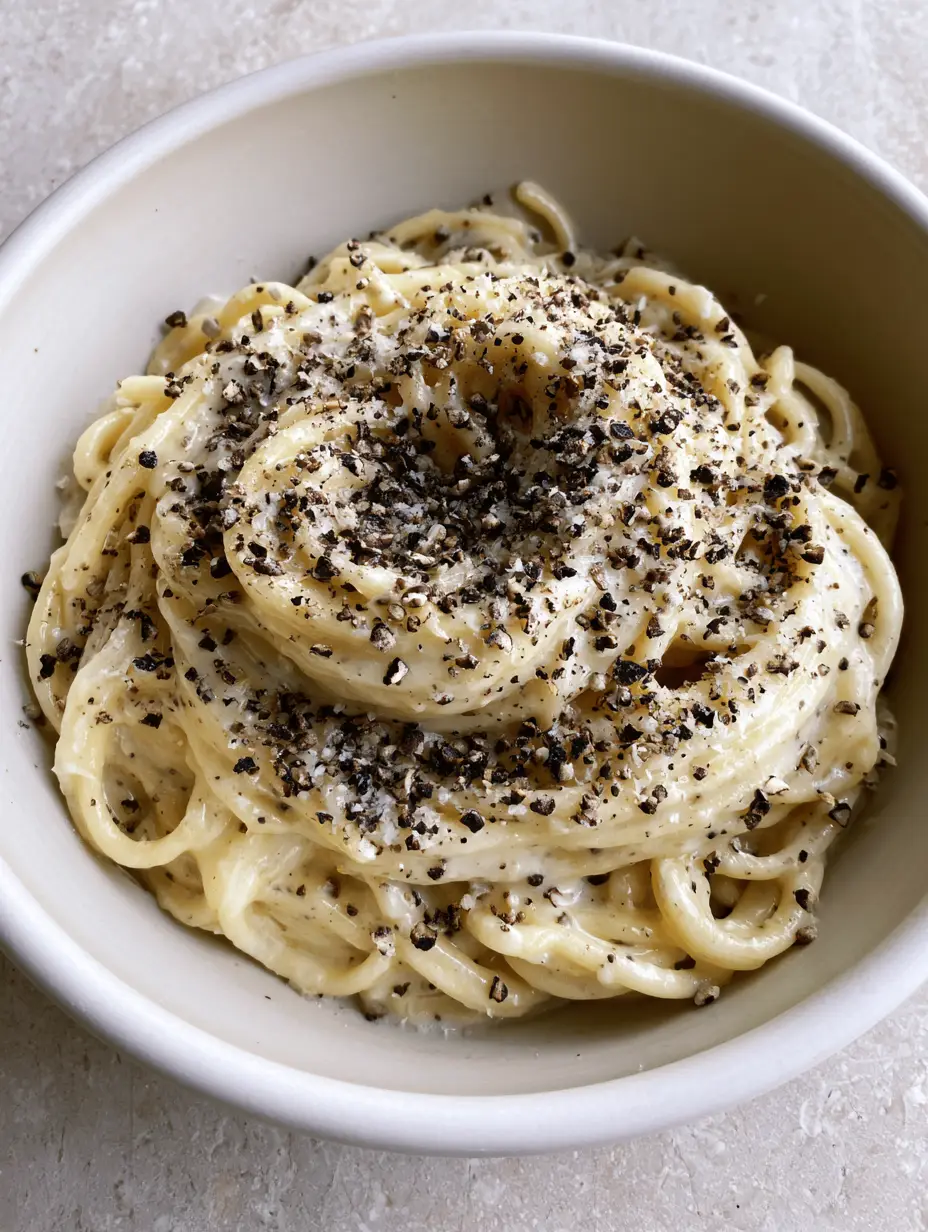
Cacio e Pepe Recipe: The Ultimate Guide to Creamy Roman Pasta
Ingredients
Equipment
Method
- Bring a pot of salted water to boil. Add spaghetti and cook until 2 minutes before al dente.
- Toast coarsely cracked pepper in a large skillet over medium heat for 2 minutes until fragrant.
- Mix finely grated Pecorino Romano with a small amount of warm pasta water to form a smooth paste.
- Transfer pasta to skillet with toasted pepper and a splash of pasta water. Turn off heat, stir in cheese paste, and toss until glossy.
- Plate the pasta in a tall swirl and garnish with more cracked pepper and grated cheese.
Notes
Turn off the heat before adding cheese to ensure a silky emulsion.
Save This Recipe to Pinterest!
If you loved this Cacio e Pepe Recipe, please save it to your Pinterest boards using the image below! We love seeing your recreations, so feel free to upload a photo of your finished dish in the comments or tag us at @Noudish_Recipes. Your 5-star ratings help us continue to provide high-quality, professional recipes!