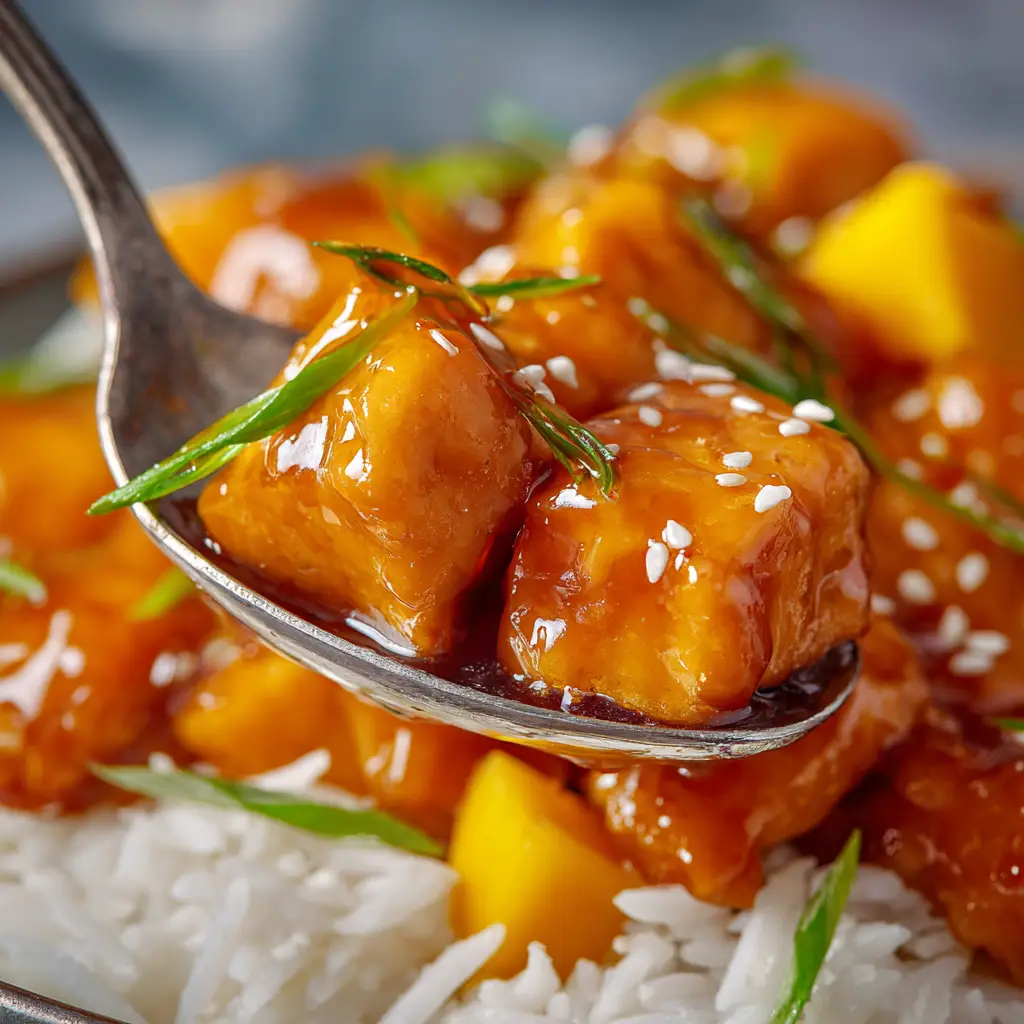
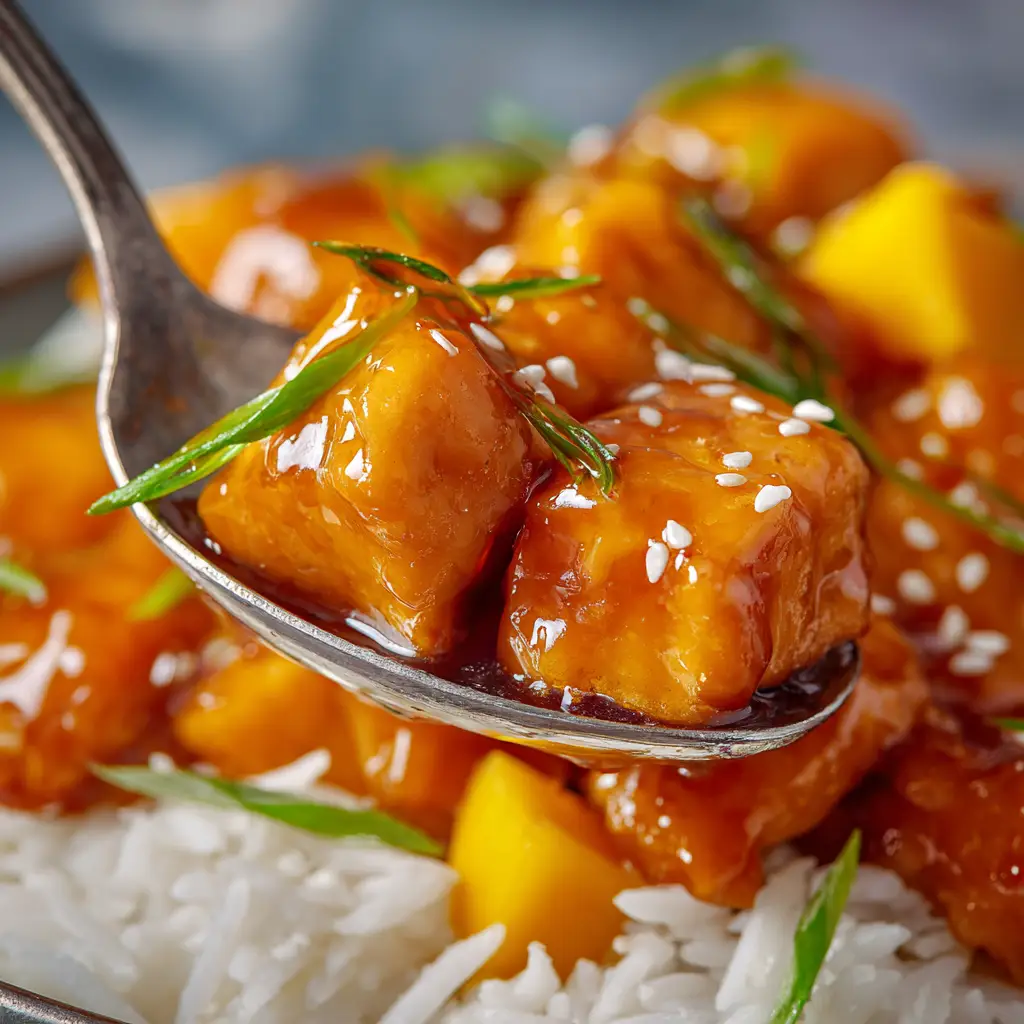
There is something undeniably hypnotic about the way a perfect glaze catches the light. This Mango Glazed Chicken is not just a meal; it is a visual and culinary masterpiece characterized by its translucent orange sheen and vibrant tropical flavors. If you have ever scrolled through food photography and wondered how to achieve that professional “macro-level” gloss, you are in the right place.
This recipe captures the essence of summer with every bite. Imagine succulent, fibrous chicken cubes enveloped in a sticky, honey-colored sauce that clings to every crevice. Combined with soft, square-cut mango chunks and a sprinkle of toasted sesame seeds, this dish delivers a sophisticated balance of sweetness, acidity, and savory depth.
The beauty of this Mango Glazed Chicken lies in its material realism. We are focusing on high-impact textures—the oily sheen of the sauce, the irregular drips, and the soft bed of white jasmine rice that absorbs the excess nectar. Whether you are cooking for a weeknight treat or a weekend dinner party, this dish is designed to impress both the eyes and the palate.
Why This Sticky Mango Masterpiece Works
- Unmatched Visual Appeal: The glaze is engineered to be translucent and glossy, creating a professional-grade finish that looks like a high-end food magazine spread.
- Perfect Textural Contrast: We pair seared, fibrous chicken cubes with buttery, soft diced mango for a mouthfeel that is both substantial and meltingly tender.
- Scientifically Balanced Sauce: By balancing natural mango sugars with soy sauce and ginger, we achieve a “sticky” factor without the dish becoming cloyingly sweet.
- Garnish Precision: The asymmetrical placement of green onions and sesame seeds provides a “beautifully messy” aesthetic that highlights the vibrant orange hues.
Essential Elements for a Translucent Mango Glaze
To achieve the specific visual result seen in our professional photography, every ingredient serves a dual purpose: flavor and structure. We aren’t just making a sauce; we are building a glaze with an oily sheen and high material realism.
Chicken Breast or Thighs: 1.5 lbs (680g) cut into 1-inch (2.5cm) cubes. The chicken provides the fibrous texture that allows the glaze to pool and drip irregularly for that perfect “messy” look.
Fresh Ripe Mango: 2 large mangos (approx. 400g), diced into perfect squares. One mango is pureed for the base of the glaze, while the other is kept in soft chunks for structural contrast.
Mango Nectar: 1/2 cup (120ml) of high-quality nectar. This intensifies the orange color and ensures the glaze remains translucent rather than muddy.
Honey or Agave: 1/4 cup (60ml). This is the “secret” to that incredible sticky texture and the high-gloss oily sheen that reflects natural daylight.
Soy Sauce: 2 tbsp (30ml). This adds the necessary salty umami to balance the fruit sugars and deepens the orange hue to a rich amber.
Fresh Ginger and Garlic: 1 tbsp (15g) each, finely minced. These aromatics provide the “stray grains” of texture within the sauce that catch the light in macro photography.
Cornstarch: 1 tsp (5g). Just enough to provide body to the glaze without making it opaque or cloudy.
Vegetable Oil: 2 tbsp (30ml). Used for the initial sear to create the “oily sheen” and those slightly crispy, irregular edges on the chicken cubes.
Tools Required for Culinary Precision
To recreate the “macro-lens” quality of this dish, you need equipment that allows for high-heat searing and precise sauce reduction. A heavy-bottomed stainless steel pan or a well-seasoned cast-iron skillet is ideal for developing the chicken’s texture. You will also need a high-speed blender to create the smooth, translucent base for the glaze. Finally, a sharp chef’s knife is non-negotiable for achieving those clean, square diced mango chunks.
Step-by-Step Mastery: Achieving the Perfect Oily Sheen
Preparing the Mango Foundation
Start by peeling your mangos. Take one mango and process it in a blender until completely smooth; this is your liquid gold. Take the second mango and carefully cut it into 1/2-inch (1.25cm) squares. This “soft square” shape is vital for the visual symmetry of the final scooped bite.
Searing for Fibrous Texture
Heat 2 tbsp (30ml) of oil in your skillet over medium-high heat. Season your chicken cubes with salt and pepper. Add them to the pan in a single layer, ensuring they don’t crowd. Sear until a deep golden-brown crust forms on at least two sides. You want to see the visible fibrous texture of the meat, which will later “trap” the sticky glaze.
Constructing the Glossy Glaze
Remove the chicken from the pan and lower the heat to medium. Add the ginger and garlic, sautéing for 30 seconds until fragrant. Pour in the mango puree, mango nectar, honey, and soy sauce. Whisk in your cornstarch slurry (cornstarch mixed with a teaspoon of water). Stir constantly as the sauce begins to bubble.
The Glazing Transformation
Watch for the visual cue: the sauce will transition from a matte orange to a glossy, translucent amber. Once it reaches this stage, return the chicken to the pan. Toss the cubes until they are fully coated in an oily, translucent sheen. Finally, fold in the soft mango squares gently so they retain their shape but become warmed through and coated in sauce.
Pro Secrets for Sticky, Glossy Mango Perfection
- The “Translucency” Test: Your glaze should look like liquid stained glass. If it looks too thick or cloudy, add a splash of water or extra mango nectar to thin it back to a glossy state.
- Don’t Overcook the Mango: Add the diced mango squares at the very last second. They should be soft to the bite but still hold their square shape for the best visual contrast against the chicken.
- Achieving the “Beautifully Messy” Look: When serving over jasmine rice, don’t worry about being too neat. Let the sauce drip irregularly and scatter your garnishes asymmetrically to create a dynamic, appetizing composition.
- The Heat Factor: Keep the heat at a simmer once the chicken is added. High heat can burn the sugars in the honey and mango, turning your bright orange glaze into a dark, bitter mess.
Storage, Reheating & Freezing Guidelines
This Mango Glazed Chicken is best served immediately to maintain the “oily sheen” and the integrity of the mango chunks. However, leftovers can be stored in an airtight container in the refrigerator for up to 3 days. When reheating, do so gently on the stovetop with a tablespoon of water to loosen the glaze and restore its glossy finish.
We do not recommend freezing this dish, as the fresh mango chunks will lose their “soft square” structure and become mushy upon thawing, ruining the high-material realism of the recipe.
Creative Pairings and Side Dishes
To complement the sweet and savory profile of the Mango Glazed Chicken, you want sides that offer crunch or a refreshing acidic bite. A bright spicy pineapple cucumber salad provides a cooling contrast to the sticky glaze. If you want to keep the tropical theme going, consider serving this alongside some air fryer zucchini bites for a low-carb veggie addition.
For those looking for a more substantial meal, this chicken pairs beautifully with a side of black bean and corn quinoa salad. The earthiness of the quinoa balances the nectar-like sweetness of the mango perfectly. If you have leftover rice, you could even transform the meal the next day into a tropical stir-fry with refrigerator pickles on the side for a vinegary pop.
Frequently Asked Questions
Absolutely. Chicken thighs have more fat, which contributes to the oily sheen and provides a richer, juicier fibrous texture in the final bite.
Yes, but thaw it completely and pat it dry first. Frozen mango is softer, so fold it in very gently at the end to keep the square shape.
The key to stickiness is the honey and the reduction time. Let the sauce simmer until it coats the back of a spoon and looks translucent.
This specific version is sweet and savory. To add heat, you can stir in a teaspoon of red chili flakes or sriracha into the glaze while it simmers.
White jasmine rice is ideal because its floral aroma complements the mango, and its soft texture absorbs the translucent glaze beautifully.
The Official Mango Glazed Chicken Recipe
Mango Glazed Chicken: The Ultimate Sticky and Glossy Tropical Dinner
Ingredients
Equipment
Method
- Puree one mango in a blender until smooth. Dice the second mango into clean 1/2-inch squares.
- Heat oil in a skillet. Sear chicken cubes until golden brown and fibrous texture is visible, about 5-7 minutes.
- Sauté ginger and garlic. Add mango puree, nectar, honey, and soy sauce. Whisk in cornstarch slurry and simmer until translucent and glossy.
- Toss chicken in the glaze. Fold in mango squares. Serve over jasmine rice and garnish with sesame seeds and green onions.
Notes
Ensure the chicken is patted dry before searing to get the best texture.
Join the Community and Share Your Creations
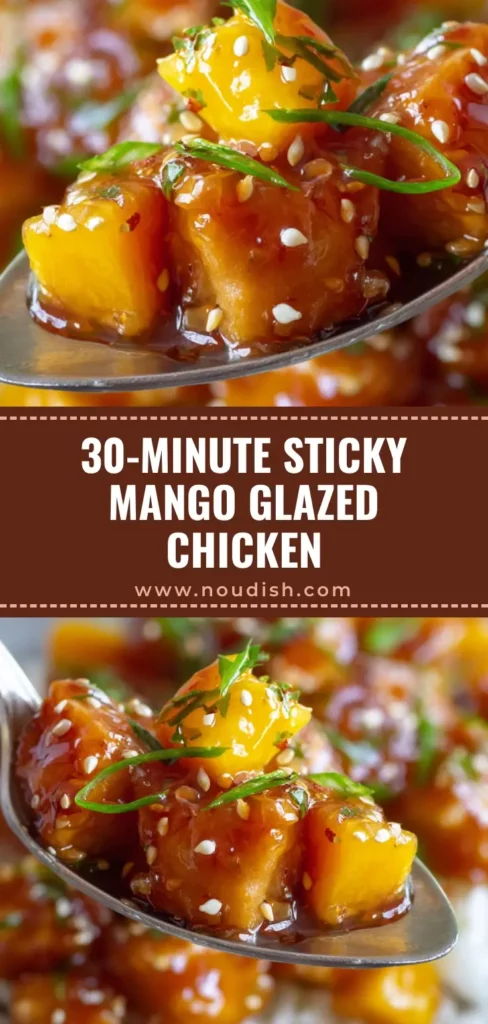
We can’t wait to see your version of this Mango Glazed Chicken! Did you manage to capture that perfect glossy drip? Tag us in your photos and let us know how the flavors turned out in the comments below. For more visually stunning and scientifically sound recipes, be sure to sign up for our newsletter.
Don’t forget to save this recipe to your “Dinner Inspiration” board on Pinterest so you can find it whenever you need a tropical escape in your kitchen!